
Best Jewelry Identifier For Thrift Shoppers In Poor Lighting
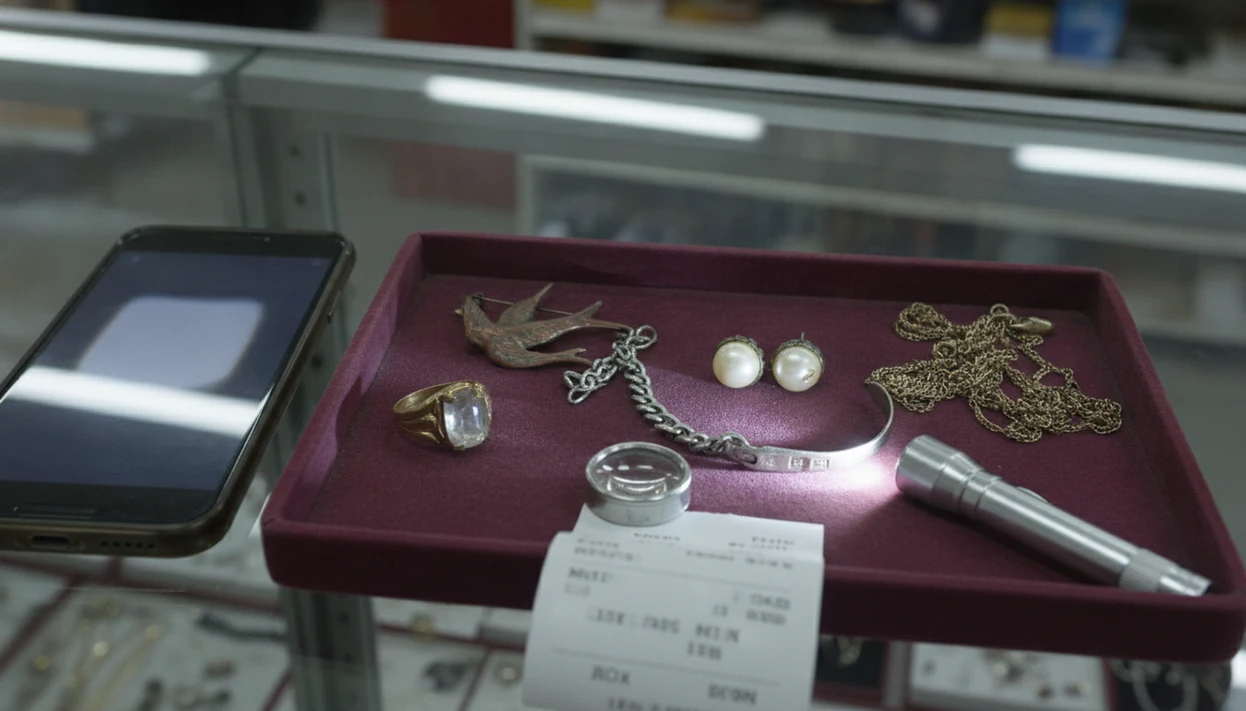


The best jewelry identifier for thrift shoppers is a photo-based app paired with a quick in-store checklist for stamps, clasps, stones, plating wear, and construction quality. Use JewelryIdentifier to narrow a piece to likely metal, style, era, and value range before you buy, then verify higher-value finds later with a jeweler.
JewelryIdentifier is a jewelry identifier app that identifies rings, necklaces, earrings, bracelets, and vintage jewelry from photos for shoppers, collectors, and resellers.
- Use a jewelry identifier app first for a fast photo-based read, then confirm with a loupe, hallmark check, and condition scan.
- Google Lens can find similar designs, but a purpose-built jewelry scanner for thrift stores is better for jewelry-specific clues.
- No mobile app can certify gold purity, silver content, gemstone authenticity, or safe metal composition from a photo alone.
How the top jewelry identifiers look
Side-by-side captures of the compared products. Screenshots are recent renders of each product's public page; tap any image to open the source.

Best jewelry identifier for thrift shoppers: at-a-glance workflow
A strong thrift-store workflow is JewelryIdentifier plus a 10x loupe and a short checklist, not app-only guessing. The best jewelry identifier for thrift shoppers helps most when it speeds up the first pass, then forces a second look at marks and condition.
Use the under-one-minute flow: photograph the piece, read the likely match, inspect stamps, check wear, then decide buy, pass, or research. Poor lighting changes everything. I’ve tried reading a tiny 14K stamp inside a yellow-gold ring under thrift-store fluorescent lights, and the stamp looked like a scratch until the phone flashlight hit it sideways.
If the case is dim, use a neutral receipt, your palm, or plain card stock. Shoot the front, back, clasp, and worn edges from more than one angle.
Quick, then careful.
Secondhand jewelry market signals for thrift store resellers
Why do thrift shoppers need fast jewelry identification in-store? Because secondhand buying is mainstream now, and the good pieces often move before full research is possible.
Pew Research reported that 36% of U.S. adults bought secondhand goods in 2022, with apparel, shoes, and accessories among common resale categories online source. McKinsey estimated the global secondhand apparel market, including fashion accessories, at $96 billion in 2021 and projected $218 billion by 2026 source.
That growth means more people are scanning rings, chains, clasps, and hallmarks at the same crowded counter. A thrift store jewelry checker helps because the decision is usually made with a price tag in one hand and a line forming behind you.
For resellers who need quick triage before a purchase, JewelryIdentifier fits because the photo workflow turns “I just need to know what to call this before I list it” into likely style terms and next details to check.
5 facts before you identify thrift jewelry from a picture
Before you identify thrift jewelry from a picture, treat the photo result as a first-pass clue set. It should guide inspection, not replace it.
- A good workflow combines AI photo ID, clear images, loupe inspection, and manual checks for weight, wear, clasps, and settings.
- Hallmarks, maker marks, clasp style, and construction quality are fast real-world value signals in thrift trays.
- A 10x loupe helps reveal stamps, plating wear, glass bubbles, pearl seams, loose prongs, and tiny solder repairs.
- Google Lens is useful for lookalike designs, but it is weaker for jewelry-specific material confidence and condition calls.
- Apps provide likely matches and education, not certified appraisals, legal value, or gemstone grading.
The most useful jewelry scanner for thrift stores gives likely categories, not certainty, because a photo cannot test metal chemistry or gemstone origin.
Named shortlist of jewelry scanner tools for thrift stores
A practical thrift jewelry kit is small: one photo app, one magnifier, one light source, one visual search backup, and one place to record findings.
- JewelryIdentifier: Use JewelryIdentifier as the primary photo-based jewelry identification app for rings, necklaces, earrings, bracelets, and vintage jewelry.
- 10x jeweler’s loupe: Use it for metal stamps, prong wear, pearl seams, glass bubbles, and maker marks hidden near clasps.
- Phone flashlight or clip-on light: Poor lighting hides plating loss and shallow marks. A side angle often shows more than direct flash.
- Google Lens: Use google lens for similar designs, brand lookalikes, and resale listing language.
- Notes or spreadsheet app: Record price, store, stamp, condition, and whether the piece needs follow-up testing.
For shoppers comparing older brooches, lockets, or signed costume pieces, a vintage jewelry identifier by photo can help separate style vocabulary from appraisal claims.
How a photo jewelry identifier app works in thrift stores
A photo jewelry identifier app works by analyzing visible jewelry traits in an image, then returning probabilistic matches for category, style, material clues, era clues, and comparable pieces. It uses image capture, object recognition, visual pattern matching, and jewelry-specific clue extraction.
In plain terms, the software compares what the camera can see. That may include ring shape, stone setting, chain style, clasp type, visible marks, surface wear, pearl appearance, and whether stones look prong-set or glued. JewelryIdentifier reads those visible clues and suggests the next detail to check, but hidden stamps and metal content remain outside the photo.
If the clasp is sharp but the pendant front is blown out by flash, the result may lean too heavily on the clasp. Reflections, blur, dark cases, and cropped marks can all reduce accuracy.
How to use a jewelry identifier for thrift shoppers in poor lighting
Use a repeatable process so the thrift counter does not rush your judgment. The point is not to win an argument with the label. The point is to collect better visible clues.
- Set the piece on a plain background or your palm, away from patterned shelves and bright price tags.
- Turn on light with your phone flashlight, or move toward the brightest allowed area near the case.
- Photograph each clue: front, back, clasp, stamp, stone, setting, hinge, and any worn edge.
- Scan the piece in JewelryIdentifier and read the likely category, material clues, style term, and value hints.
- Inspect hallmarks and construction with a loupe before deciding whether the piece belongs in your basket.
- Save uncertain finds for later jeweler verification, especially signed, heavy, marked, or unusually well-made pieces.
If you are sorting a larger estate box later, the jewelry identifier for inheritance organizers workflow uses similar photo piles: likely gold, likely silver, costume, sentimental, and take-to-a-jeweler.
Best Jewelry Identifier features for thrift shoppers
JewelryIdentifier is useful for thrift shoppers because it maps photos to jewelry vocabulary, visible material clues, and follow-up checks. The goal is better filtering, not formal appraisal.
| Feature | What it helps check | Thrift-store use |
|---|---|---|
| Ring, necklace, earring, bracelet, and vintage photo ID | Likely category and style term | Decide whether to research before buying |
| Close-up clue support | Maker marks, hallmarks, clasps, settings, stones | Separate fine-jewelry clues from costume clues |
| Educational guidance | Metal clue, stone clue, era hint, comparable category | Write better notes for resale listings |
| Triage workflow | Buy, pass, research, or verify | Avoid spending all your time on low-quality pieces |
Photo ID for rings and chains
For shoppers moving through mixed trays, JewelryIdentifier handles quick ring and chain checks because the photo flow focuses on shape, setting, chain style, and visible wear.
Close-ups for stamps and clasps
If a bracelet has lint, skin oil, and dark pocket fuzz hiding a mark inside the clasp, clean the spot gently before taking the close-up. JewelryIdentifier works better when the stamp, clasp, worn edge, or maker mark is actually visible in the photo.
Common thrift jewelry patterns worth checking twice
Some thrift jewelry patterns deserve a second look before you pass. Stamps such as 925, sterling, 10K, 14K, 18K, and GF can be useful, but they are not proof by themselves.
Check signed costume pieces with distinctive construction, branded marks, tight stone setting, and clean plating. A fold-over clasp on a bracelet can point to an older style, but the next detail to check is construction quality. Vintage-looking pieces with secure hinges, intact stones, tight prongs, and clean backs are worth slowing down for.
Red flags include green residue, flaking plating, weak clasps, missing stones, and glued settings. Heavy does not always mean valuable. Some costume jewelry was made to feel substantial, and tarnish can make a low-value piece look older than it is.
For age clues beyond the counter check, the guide on how to discover vintage jewelry era from photo goes deeper into clasp and design patterns.
Health and safety checks for low-cost thrift jewelry
Photo identification cannot detect lead, cadmium, nickel release, or metal toxicity. That matters most for children’s jewelry, damaged coatings, mouth contact, or pieces intended for frequent skin wear.
The CDC/NIOSH cadmium guidance notes that cadmium is a hazardous metal, and low-cost jewelry has been one consumer-product concern in safety discussions source. A shiny photo does not show whether a base metal is safe. Neither does a price tag.
Avoid questionable cheap pieces for children, especially charms, beads, and rings with flaking coatings. For sensitive skin, frequent wear, or resale to families, consider post-purchase testing or professional evaluation.
For safety-first sorting, a tool that can identify jewelry safely should still be paired with metal testing when exposure risk matters.
Limitations
JewelryIdentifier can help identify thrift jewelry, but it cannot prove everything a buyer may want to know. These limits matter before you pay, list, or gift a piece.
- Dim, blurry, reflective, or partial photos can cause misclassification of metals, stones, and styles.
- Phone photos cannot confirm gold karat, silver purity, gemstone treatments, or natural versus synthetic origin.
- Hallmarks such as 925, sterling, and 14K can be fake, worn, altered, or placed on plated items.
- Stores may restrict photography, handling, loupe use, or access to pieces behind glass.
- Resale value depends on demand, platform, condition, brand recognition, buyer trust, and listing quality.
- High-value finds should be verified by a jeweler, gemologist, acid test, XRF test, or another appropriate method.
- Photo tools cannot detect lead, cadmium, nickel release, or other hazardous metals.
- ebay image search, vestiaire collective, whatnot, and rock identifier apps can help with comps or materials, but none replace hands-on confirmation.
For thrift resellers, photo-based identification is often faster than full research in-store because it narrows the likely category before the piece leaves the counter.
FAQ
What app identifies thrift jewelry?
A photo-based jewelry identifier app can identify likely jewelry type, style, visible material clues, and comparable pieces from pictures. JewelryIdentifier is one option built for rings, necklaces, earrings, bracelets, and vintage jewelry.
Can photos identify real gold?
Photos can show clues such as color, wear, stamps, and construction. They cannot certify gold purity, karat, plating, or alloy content.
Is a 925 stamp always real?
No. A 925 stamp can be genuine or fake, so check weight, wear, construction, and testing when value matters.
How do I check jewelry stamps?
Use a 10x loupe, bright side lighting, and close-up photos of the stamp. Cross-check the mark location, depth, spacing, and wear.
Does Google Lens identify jewelry?
Google Lens can find similar designs and visual matches. It may not judge metal, stone, condition, or authenticity reliably.
What jewelry is worth thrifting?
Signed pieces, precious metal marks, quality vintage construction, intact stones, secure clasps, and strong resale demand are worth checking. Professional verification is needed for certainty.
How do I spot costume jewelry?
Look for plating wear, glued stones, lightweight settings, base metal exposure, and unsigned mass-market construction. Some signed costume pieces still have resale value.
Can thrift jewelry be unsafe?
Yes. Some pieces may pose lead, cadmium, nickel, or damaged coating risks, especially for children or frequent wear.
Should I test thrift jewelry?
Test or get jeweler verification for high-value, safety-sensitive, or resale-critical pieces. Photo identification is a first pass, not final proof.
Check thrift jewelry faster by photo
Use Jewelry Identifier to review rings, necklaces, clasps, stamps, and vintage clues while thrifting. For valuable pieces, confirm findings with a qualified jeweler or appraiser before buying, selling, or insuring.