
How Much Is My Ring Worth? A Practical Estimate Workflow
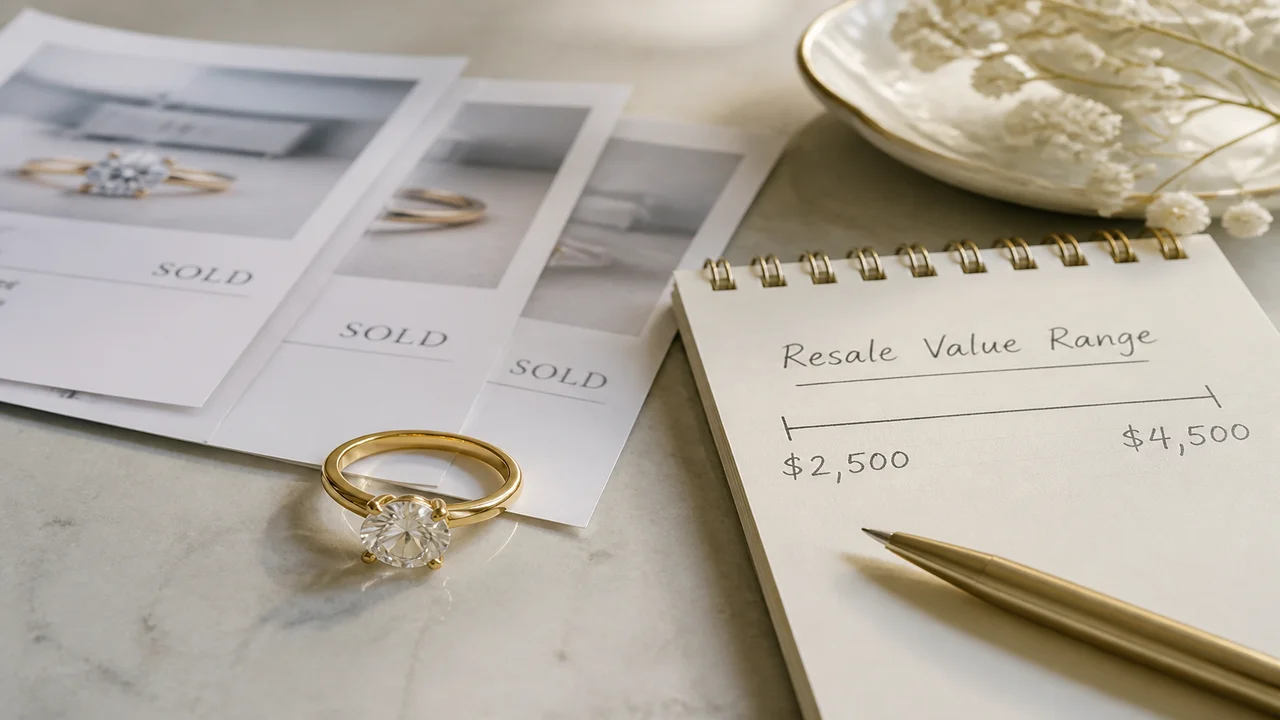
A ring’s likely value depends on what it is, what it contains, its condition, documentation, and the market in which it will be sold. A clear photo can start the process, but it cannot reveal exact gold purity, stone identity, treatments, hidden repairs, or a defensible insurance value.
Important: Jewelry Identifier provides photo-based identification and research clues. It is not a certified appraisal, assay, or laboratory grading service. Any number developed from photos is an estimate, not an appraisal.


Can You Appraise a Ring Online?
You can obtain an informal online estimate, but the word “appraise” is often used too loosely. A photo reviewer may identify a solitaire setting, read a 14K stamp, notice a maker’s signature, and compare similar rings. That can support a broad market range. It does not prove that the stamp is accurate, that the center stone is diamond, or that the ring has no structural problems.
| Method | Useful output | What it cannot prove |
|---|---|---|
| Photo identifier | Style, setting, shape, visible stamp, era clues | Purity, gemstone species, grade, treatment, value |
| Online estimate | Preliminary range from supplied facts and comps | Facts omitted from photos or insurer acceptance |
| Professional appraisal | Purpose-specific description and valuation | The exact future resale price |
| Gem lab report | Stone identity and grading characteristics | The value of the complete ring |
Start by naming the piece with a ring identifier by picture. If the result affects money, keep the language conditional until a professional has tested the ring.
Photos and Measurements Needed for a Ring Estimate
A useful estimate file is more than one glamorous top view. Clean the ring gently, avoid filters, and use indirect daylight. Do not risk loosening a stone or polishing away patina merely to improve a photograph.
- Full views: Photograph the ring from the top, both sides, and straight through the shank.
- Construction: Capture the gallery, shoulders, prongs, bezel edges, solder seams, and worn areas.
- Marks: Take macro photographs of every hallmark, maker mark, patent number, and engraving. See how to photograph jewelry stamps.
- Scale: Record ring size, total gram weight, band width, setting height, and stone dimensions in millimeters.
- Records: Add receipts, lab reports, old appraisals, repair invoices, boxes, and known ownership history.
A scale that reads to 0.1 gram is useful for research, but weight alone does not reveal how much is precious metal because stones and non-metal components are included. Never estimate a mounted diamond’s exact carat weight from a face-up picture.
Ring Value Factors to Record
| Factor | Evidence to collect | Why it changes value |
|---|---|---|
| Metal | Stamp, tested purity, gram weight | Sets material floor and buyer confidence |
| Stones | Measurements, lab report, condition | Identity and grade can dominate value |
| Maker | Signature, serial, provenance, box | Documented brands may command premiums |
| Age and style | Construction, setting, comparable examples | Demand varies by period and design |
| Condition | Prongs, chips, sizing, repairs, wear | Repair cost and originality affect buyers |
| Market | Auction, dealer, marketplace, scrap | Each venue has different fees and buyers |
A stamp is a clue rather than proof. Learn the distinction in how to tell if a ring is real, especially before using metal or stone claims in a listing.
Sold Comps Workflow for a Ring Estimate
Comparable sales work only when the comparison is genuinely close. A live listing for a pristine branded ring is poor evidence for an unsigned worn ring with an untested stone.
- Describe: Create a neutral specification: ring type, metal test or stamp, weight, stone dimensions, maker, era, size, and condition.
- Search: Look in completed auction archives and sold marketplace filters, not only active listings.
- Match: Keep comps with similar maker status, verified materials, scale, design, age, and condition.
- Normalize: Note buyer’s premium, shipping, platform fees, repairs, missing stones, and whether the sale included a lab report.
- Range: Use several credible sales, reject unexplained outliers, and state the date and market.
- Verify: Have valuable materials tested before narrowing the estimate or publishing factual claims.
A sensible output is “estimated resale range in this market, subject to testing,” not a single timeless number. Insurance replacement, fair market, auction, dealer offer, and scrap values answer different questions.
What a Ring Photo Can and Cannot Prove
| A photo can support | A photo cannot certify |
|---|---|
| Likely ring style and setting vocabulary | Gold karat or platinum purity |
| Visible stamps and maker-mark leads | Whether a stamp is genuine |
| Apparent stone shape and visible damage | Diamond authenticity, grade, or treatments |
| Construction and era clues | Exact age, provenance, or brand authenticity |
| Candidate comparable designs | Certified appraisal or guaranteed sale price |
For a stone-specific limit, read can an app tell if a diamond is real. Photo or app output is not laboratory grading.
When a Professional Ring Appraisal Is Required
Use a qualified, independent appraiser when a written value will be relied upon by an insurer, court, estate representative, tax authority, donor, buyer, or family member. Professional review is also prudent for a signed ring, a large center stone, an inherited piece with uncertain ownership history, or a ring that may be unsafe to wear.
- Insurance scheduling or replacement-value documentation
- Probate, estate division, divorce, donation, or tax reporting
- High-value purchase, sale, consignment, or auction reserve
- Suspected antique, designer, natural diamond, or rare gemstone
- Conflicting stamps, reports, seller claims, or ownership records
Ask what value type the report uses, whether testing is included, and whether a separate gemological report is recommended. Compare the roles in app versus professional appraisal.
Estimate, Not Appraisal: How to State the Result
Write down assumptions beside the estimate: “14K stamp not independently tested,” “center stone presumed but not confirmed,” “range based on five online sold results,” and “condition assessed from photos.” This prevents a tentative clue from becoming an accidental guarantee.
Markets and metal prices change, and photographs can omit decisive defects. Jewelry Identifier can help organize visual evidence and search terms, but it does not issue certified appraisals or lab grades. Before selling, insuring, dividing, or altering an important ring, verify the facts that drive the number.
Frequently Asked Questions
Can I find out what my ring is worth from a photo?
Photos can support a preliminary price range when combined with weight, measurements, marks, condition, and comparable sales. They cannot produce a certified appraisal or verify hidden materials.
Is an online ring estimate an appraisal?
No. An online estimate is an informal opinion based on limited information. A formal appraisal is a purpose-specific written valuation prepared by a qualified professional.
Which ring photos are most useful?
Photograph the full ring, top, side profile, gallery, inside band, stamps, stone close-ups, and damage in sharp neutral light beside a ruler.
Should I use asking prices or sold prices?
Use completed sold prices whenever possible. Asking prices show seller expectations, while sold prices provide stronger evidence of what buyers actually paid.
When do I need a professional ring appraisal?
Use a qualified appraiser for insurance, estates, tax, divorce, legal disputes, valuable resale decisions, or whenever metal and gemstone identity must be verified.