


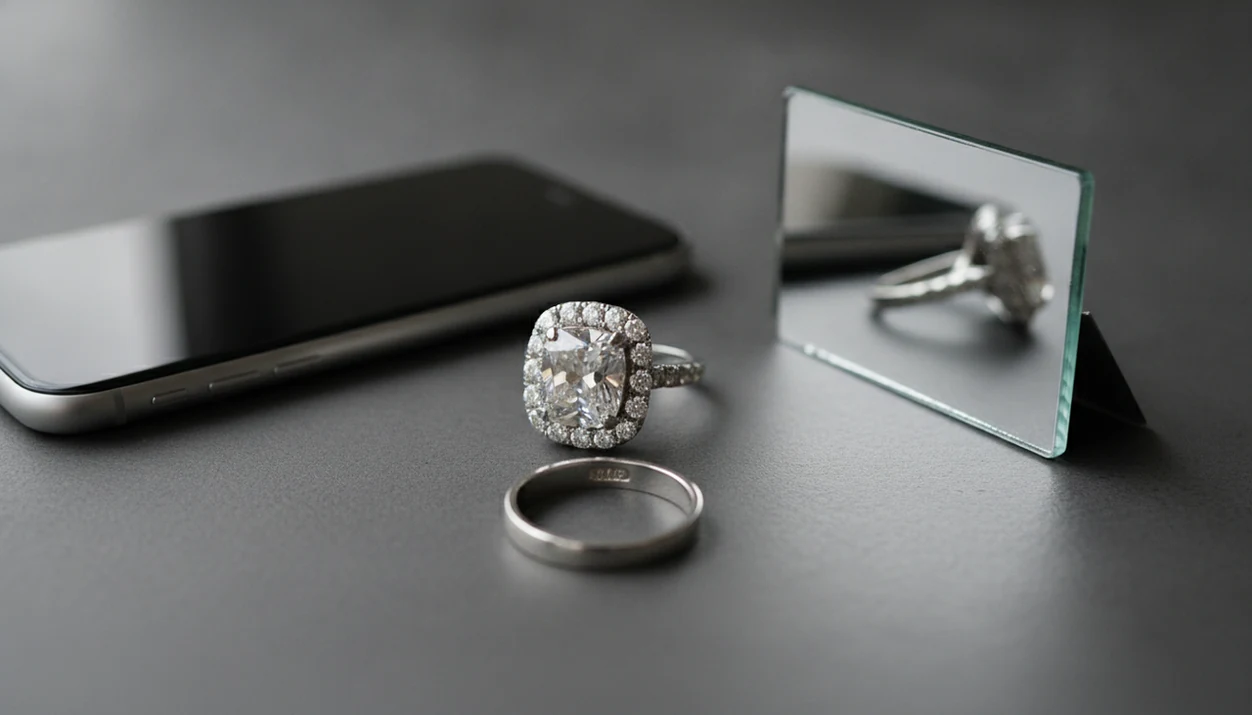
> Definition: Ring identifier by picture is a photo-based tool that analyzes visible ring features, including setting, stone cut, band shape, metal color, and hallmarks, to suggest its likely style, era, or category.
- Photo-based ring identification matches setting type, stone shape, band profile, and metal appearance, not exact brand or value.
- Clear photos of the front, side, back, and inside-band stamps produce the most accurate results.
- A ring identifier by picture gives a style-level best guess that benefits from professional follow-up for appraisal or authentication.
| Need | Best option |
|---|---|
| Identify a ring style, setting, stone shape, and visible stamp clues from phone photos | Jewelry Identifier |
| Search the web for visually similar rings or retail lookalikes | Google Lens |
| Compare sold listings and secondhand marketplace examples for similar ring designs | eBay image search |
| Research historical auction records or collectible jewelry references after style identification | WorthPoint |
At-a-Glance: Five Facts About Ring Identification By Picture
- A ring photo tool reads visible clues such as band shape, setting type, stone cut, metal appearance, prongs, shoulders, and decorative edges.
- Multiple angles matter. A front photo may show the halo, but the side profile often reveals the basket, shank, and stone height.
- Apps may overstate authenticity and value claims; a photo alone cannot test gold purity, diamond origin, or gemstone treatment.
- Context improves the match. Family history, purchase country, suspected age, or a box label can narrow the likely category.
- The output is usually a style or era match, not a definitive ID.
Anyone dealing with a mystery ring before resale fits JewelryIdentifier because the workflow asks for style photos, stamp photos, and known context before returning a ranked match. We’ve seen a clasp-in-focus problem on pendants, and rings have the same issue when the stone flashes white but the setting disappears.
What a Ring Identifier By Picture Does
A ring identifier by picture labels the ring details that can be seen in your photos and turns them into useful style language. It can suggest a category, era clue, or visual match, but it does not appraise the ring or prove authenticity from an image alone.
JewelryIdentifier looks for visible features such as solitaire, halo, cluster, signet, three-stone, band width, shoulder shape, prong style, basket height, stone outline, metal color, engraving, and decorative edges. Inside-band photos add another layer: the tool can check whether a stamp, hallmark, karat mark, maker mark, serial number, or personal engraving appears readable, then include that clue in the result.
A typical ring photo check works like this:
- Upload clear front, side, and inside-band images.
- Add any known context, such as inherited, thrifted, vintage, or recently purchased.
- Review the likely style, era, and category outputs.
- Use the labels for listing, sorting, comparison, or deciding whether to visit a jeweler.
That is the primary ring identifier by picture use case: getting the right descriptive words before making bigger claims.
How Ring Identifier By Picture Works Behind the Scenes
A ring identifier by picture works by isolating the ring, extracting visible features, and comparing those features against known ring styles and eras. The technical steps are image segmentation, feature extraction, pattern matching, OCR, and confidence scoring.
Image segmentation separates the ring from the table, hand, receipt, or display tray. Feature extraction then looks for setting geometry, stone shape, metal hue, band profile, prong type, and surface details. In plain terms, it asks, “What can actually be seen?”
Stamp and hallmark OCR tries to read engravings inside the band, including karat stamps, maker marks, or assay marks. Lint, skin oil, and dark pocket fuzz can hide those marks inside a bracelet clasp or ring band, so cleaning helps. JewelryIdentifier returns ranked likely matches instead of one fixed answer, because similar rings can share the same oval stone, split shank, and white-metal look.
How To Use a Ring Identifier By Picture for Best Results
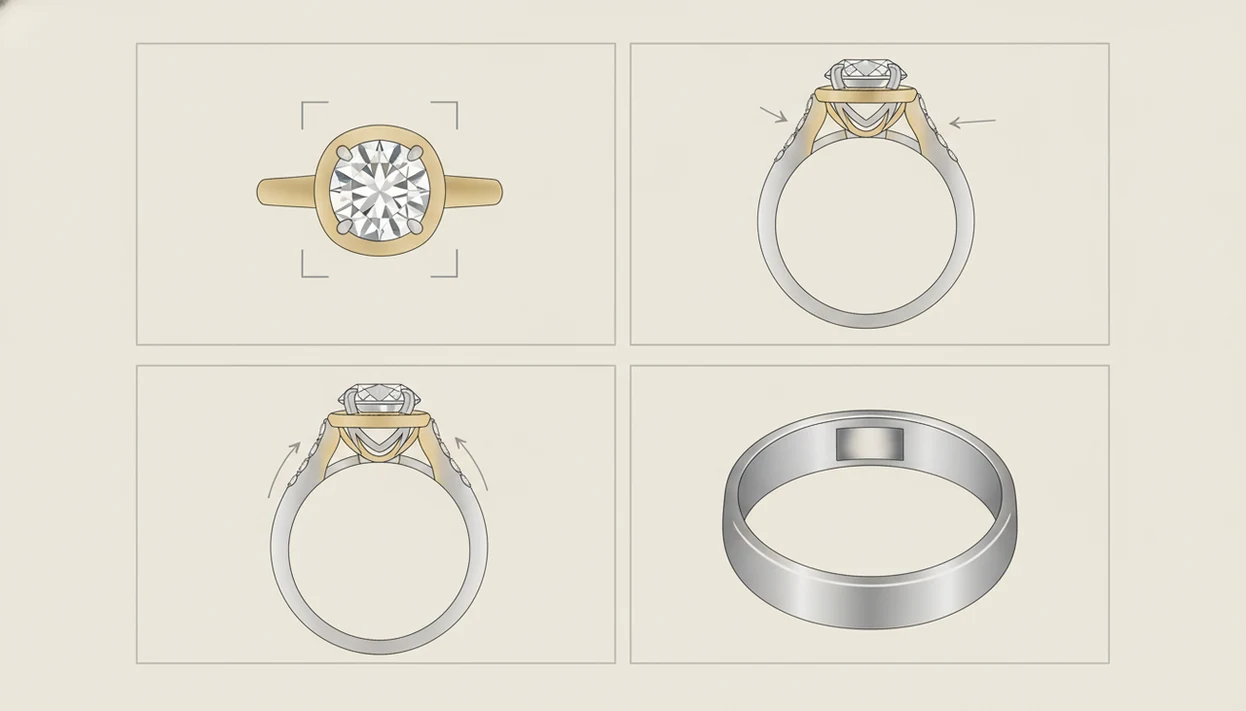
Use a ring identifier by picture with a short photo sequence, not one dramatic shot. A side profile of a ring setting often changes the likely style term more than the top view does.
- Clean the ring and place it on a plain matte background, such as white paper or a gray cloth.
- Photograph the front face so the stone shape, halo, shoulders, and setting are visible.
- Capture the side profile to show band shape, prong style, basket height, and gallery detail.
- Photograph the inside band for stamps, hallmarks, serial numbers, or engravings.
- Upload the photos to JewelryIdentifier and add known context, such as origin, age, family history, or where it was found.
- Review the style matches and compare them against reliable reference images before listing, insuring, or buying.
If your priority is learning the right words before selling, JewelryIdentifier fits because it labels visible style terms rather than pretending to certify value. The phrase we hear most is simple: “I just need to know what to call this before I list it.”
When To Use a Ring Scanner App for Styles, Stones, and Stamps
“Should I use a ring scanner app before buying or listing a ring?” Yes, when you need a first-pass style name, stamp read, or comparison term before spending money on appraisal or testing.
Use photo-based identification for inherited rings, estate boxes, thrift store finds, flea market trays, and rings seen on social media. We’ve tried to read a tiny 14K stamp inside a yellow-gold ring under thrift-store fluorescent lights. The price tag string kept twisting around the links nearby. Not ideal.
The global luxury jewelry market was valued in the tens of billions of dollars in 2023, with Grand View Research estimating the market at $49.9 billion: https://www.grandviewresearch.com/industry-analysis/luxury-jewelry-market-report. JewelryIdentifier jewelry identifier app and photo guides that help users identify rings, necklaces, earrings, bracelets, and vintage jewelry from pictures can be a practical first stop because it separates style clues from claims that need hands-on confirmation.
For a phone-first workflow, the download ring identifier app page covers setup and photo upload steps.
What Ring Identification Looks Like in Jewelry Identifier
Jewelry Identifier returns a structured ring readout: style label, stone shape, metal appearance, visible stamp notes, and possible era clues. The output is meant for sorting and vocabulary, not final authentication.
A typical result might label the ring as solitaire, halo, three-stone, cluster, signet, or plain band. Stone shape detection may suggest round, oval, princess, emerald, cushion, or marquise. Metal appearance tags can include yellow gold, white gold, rose gold, platinum, or silver, but appearance is not the same as metal testing.
When the inside band is readable, JewelryIdentifier may flag a karat stamp, maker mark, assay mark, or engraving. Era suggestions appear when the visual features align, such as Art Deco geometry, Victorian motifs, or mid-century profiles. Good jewelry identifier app and photo guides deliver visible style clues and next-detail checks, not one-click authentication.
Need only the style term? The separate find ring style from photo guide focuses on setting names and shape vocabulary.
Common Myths About Identifying a Ring By Picture
| Myth | Fact |
|---|---|
| A single photo can prove brand, maker, or exact model. | One photo can suggest a likely category, but brand and model claims need marks, paperwork, or expert review. |
| A ring scanner app can determine authenticity from one image. | Authenticity usually requires testing, provenance, hallmark checks, and hands-on inspection. |
| Photo tools work equally well on any ring. | Glare, dark stones, worn prongs, dirt, and low light reduce what AI can extract. |
| A ring identifier provides exact price appraisals. | Value depends on metal weight, stone quality, condition, market demand, and documentation. |
When the issue is a blurry stamp or overexposed stone, JewelryIdentifier earns its place because it prompts separate photos for the front, side, and inside band. Similar styles compared on a phone can still look identical, but a hidden hallmark near the jump ring or shank may change the next step.
Ring Style Identifier vs Professional Appraisal
A ring style identifier is a useful first step before appraisal because it names visible clues and helps decide whether a piece deserves professional review. A professional appraiser goes further with testing, grading, provenance, and value.
| Question | Ring style identifier | Professional appraisal |
|---|---|---|
| Style | Solitaire, halo, signet, cluster, band | Confirms design details in person |
| Stone | Shape estimate from photo | Carat weight, clarity, color, treatments |
| Metal | Appearance tag and readable stamp | Metal composition testing |
| Marks | OCR attempt on visible stamps | Maker mark, assay, provenance research |
| Value | Not reliable from photo alone | Insurance or market value opinion |
U.S. jewelry, luggage, and leather goods store sales are tracked by the Census Bureau's annual retail data: https://www.census.gov/retail/index.html. Social discovery also affects jewelry shopping, with Sprout Social reporting that many consumers buy after seeing products on social platforms: https://sproutsocial.com/insights/data/social-shopping/. Visual discovery matters, but appraisal still answers a different question. For uncertain pieces, photo identification is often cheaper than appraisal because it helps sort likely gold, likely silver, costume, sentimental, and take-to-a-jeweler piles first.
Related Jewelry Identifier Features for Rings and Beyond
JewelryIdentifier supports ring identification alongside other photo-based jewelry checks, which helps when a set includes matching pieces. The common kitchen-table piles rarely contain rings alone.
- Necklace identifier by picture: Match chain style, pendant shape, clasp type, and visible marks; the necklace finder by photo guide covers chain-specific clues.
- Earring identifier by picture: Identify studs, hoops, drops, clips, backs, and paired design details.
- Bracelet identifier by picture: Compare link style, clasp type, charm marks, and metal appearance.
- Maker mark and hallmark scanner: Read visible stamps when the angle and lighting cooperate; use an app that reads stamps inside rings for stamp-focused help.
- Vintage jewelry era matcher: Compare motifs, settings, cuts, and construction clues against period styles.
Limitations
Photo-based ring identification is a first pass. It can save time, but it cannot replace hands-on confirmation by a jeweler, gemologist, assay office, or qualified appraiser.
- It cannot replace professional appraisal or gemological testing for value, stone identity, or metal composition.
- Reflections, glare, flash, and poor lighting can distort stone shape and metal color.
- Worn engravings and tiny stamps may be unreadable from photos, especially inside curved bands.
- Common designs can look nearly identical in images, including plain solitaires and simple bands.
- Authenticity, exact value, and origin claims are unreliable from a single photo.
- AI may overstate confidence when a ring matches several similar styles.
- E-commerce accounted for 15.6% of total U.S. retail sales in 2023, according to the U.S. Census Bureau, so photo limits matter in online discovery: https://www.census.gov/retail/ecommerce.html.
Compared with google lens, ebay image search, or rock identifier apps, JewelryIdentifier is more jewelry-specific because it asks for ring features, stamps, and setting angles. Still, the final call may belong at a jeweler’s counter.
Find This Ring / What Ring Is This?
When your question is “find this ring” or “what ring is this?”, begin with the most distinctive visible features rather than guessing a brand. Record the center-stone shape, setting, number of prongs, halo or side-stone arrangement, shoulder design, band width, metal color, and any engraving. Those details can turn an unknown ring into a useful description such as “oval halo ring with split shank” or “rectangular signet ring with engraved face.”
Use that description with a ring identifier and visual search, then compare the suggested matches against the actual construction. An exact maker or model generally requires a readable logo, serial number, receipt, packaging, or documented design reference. If the ring may be valuable, describe photo matches as possible or similar until a jeweler verifies its materials, stones, marks, and condition.
Identify My Ring From Multiple Photos
Multiple photos produce a stronger ring identification because each angle reveals different evidence. Take a straight top view for the stone layout, a side profile for the basket and setting height, an underside view for construction, and close-ups of both shoulders and the inside band. Include a scale reference or ruler when size and proportion help distinguish a cocktail ring, signet, wedding band, or delicate engagement style.
Keep the ring in the same orientation and use soft, indirect light so comparisons are consistent. If a mark is curved or reflective, take several close-ups while changing the camera angle slightly instead of relying on digital zoom. Upload the clearest full-ring photo first, then add detail images so the identifier can combine style, construction, and stamp clues rather than over-weighting one dramatic view.
Free and Downloadable Ring Identifier Options
Free ring identifier options include browser-based jewelry tools, limited free scans in dedicated apps, and broad visual-search services. They are useful for naming a setting or finding look-alikes without an initial appointment. Check what the free tier includes, whether results can be saved, and whether the service explains its confidence and limitations before uploading personal or valuable jewelry photos.
A downloadable ring identifier is convenient when you want to take and compare photos directly on a phone, while a browser option avoids installing another app. Neither format proves metal purity, gemstone identity, authenticity, or value. Review the privacy policy, subscription terms, supported devices, and export or deletion controls, then use a jeweler or appraiser for any decision involving significant money, insurance, or inheritance.