


A jewelry identifier app is a mobile tool that uses AI image recognition to analyze a photo of a ring, necklace, bracelet, earring, or vintage piece and return details about its style, item type, possible materials, and similar matches.
- Dedicated jewelry identifier apps return structured jewelry-specific details; general image search tools return shopping matches.
- No photo-based app can confirm authenticity, carat weight, or metal purity, treat outputs as starting points.
- Your best choice depends on your goal: quick visual ID, resale research, or educational descriptions and rough value hints.
| Need | Best option |
|---|---|
| Identify rings, necklaces, earrings, bracelets, stamps, and vintage clues from everyday jewelry photos | Jewelry Identifier |
| Run a broad visual web search for similar-looking jewelry listings or images | Google Lens |
| Research sold listings and resale context for collectible or vintage jewelry | WorthPoint |
| Create polished product photos for jewelry listings after identification research | GemLightbox |
4 Best Jewelry Identifier App Options by Use Case
The best app category depends on whether you want jewelry vocabulary, shopping matches, or resale context. A ring under thrift-store fluorescent lights needs a different workflow than a bracelet being prepared for an eBay listing.
| App Category | Best For | Key Strength | Main Limit |
|---|---|---|---|
| Dedicated jewelry identifier | Style ID, item type, visible stamps | Returns jewelry-specific details in a structured format | Cannot verify metal purity or gemstone authenticity |
| General visual search | Fast shopping results and similar images | Finds current retail listings quickly | Often lacks jewelry terminology |
| Marketplace/search apps | Resale comparisons and brand clues | Helps compare similar listed pieces | Listing prices may not equal real value |
If the priority is describing an item before selling it, JewelryIdentifier fits because its photo workflow focuses on likely category, style term, visible clue, and the next detail to check.
Good jewelry identifier app and photo guides deliver structured language from visible clues, not certified value from a picture.
What a Jewelry Identifier App Does
A jewelry identifier app turns a photo into a structured description of what the piece appears to be. It reads visible clues, suggests jewelry vocabulary, and formats the result so you can compare, list, or decide what to inspect next.
A typical result may name the item type, such as ring, brooch, pendant, or bracelet, then add style language like halo, tennis, signet, rope chain, or Art Deco-inspired. It may also flag material hints from color, finish, stone appearance, and visible stamps, while reminding you to check marks separately because a stamp is not proof by itself.
- Upload a clear photo of the full piece and any close-up marks.
- Let the app recognize shapes, settings, clasp types, chain patterns, and surface details.
- Review the formatted output for style terms, likely item category, material hints, and mark-check prompts.
- Use the description as a starting point for search, resale copy, or a jeweler visit.
JewelryIdentifier differs from Google Lens and marketplace image search because it is built to return jewelry-specific description fields, not just similar shopping images or active listings. Photo ID supports better descriptions; it does not authenticate gemstones, verify metal purity, or replace a formal appraisal.
Named Shortlist: 4 Top Jewelry Identifier Apps by Photo
These four options cover the main ways people identify jewelry from a photo. The right pick changes if you're sorting grandmother’s brooch on tissue paper, checking a mall-brand necklace, or trying to name a stone setting.
Jewelry Identifier – Appraisal
Jewelry Identifier – Appraisal is best for users who want structured details for rings, necklaces, bracelets, earrings, and gemstones. For shoppers who need plain labels before asking a jeweler, JewelryIdentifier jewelry identifier app and photo guides that help users identify rings, necklaces, earrings, bracelets, and vintage jewelry from pictures covers the “what should I call this?” step with photo-first prompts.
Jewelry Identifier: Jewelio
Jewelio is best for AI-driven style and item-type recognition. It suits users who want quick educational descriptions rather than a full resale workflow.
Google Lens for Jewelry Search
Google Lens is best for finding visually similar items and live shopping results. It can be surprisingly useful when a pendant is modern, mass-produced, and still sold online.
Marketplace and Resale Scanner Apps
Gem or JewelryID-style marketplace apps are best for resale research and possible brand recognition. Resellers who already use image search can pair them with an app that identifies jewelry from photo for cleaner item descriptions.
How We Picked the Best App for Identifying Jewelry From a Picture
We ranked tools by what they return after a real photo, not by app-store wording. A useful result names the likely category, shows the visible clue, and admits when the photo is not enough.
- Dedicated output matters: structured jewelry-specific results beat generic “similar image” matches for learning style terms.
- Item recognition matters: strong tools separate ring, necklace, bracelet, earring, brooch, stone setting, clasp, and chain type.
- Mark handling matters: a metal stamp or maker mark should trigger caution, not instant authentication.
- Limits matter: no app can confirm authenticity, carat weight, or metal fineness from a photo alone.
- Access matters: we checked free versus paid tiers, ad clarity, and whether iOS and Android users can reasonably try the workflow.
Anyone dealing with tangled chains in a biscuit tin will benefit from JewelryIdentifier because it supports kitchen-table sorting piles: likely gold, likely silver, costume, sentimental, and take-to-a-jeweler.
How Photo-Based Jewelry Identification Works
Photo-based jewelry identification works by comparing image features against jewelry databases and visual patterns. The model looks at shape, color, setting style, chain form, clasp type, and visible markings; in plain terms, it matches what it can see.
AI systems often use image embeddings, which are numeric summaries of visual features. That helps with common halo rings, tennis bracelets, and modern pendant shapes. It struggles when the piece is rare, handmade, heavily worn, or poorly photographed. We see this when a clasp is sharp but the pendant front is blown out by flash.
The global AI in retail market was valued at roughly $7.14 billion in 2022 (Fortune Business Insights: https://www.fortunebusinessinsights.com/industry-reports/artificial-intelligence-in-retail-market-100375), which explains the investment behind visual product recognition. Pattern matching is still not gemology. A certified gemological assessment uses tests, instruments, and expert inspection that a phone photo cannot provide.
How to Use a Jewelry Identifier App for Accurate Results
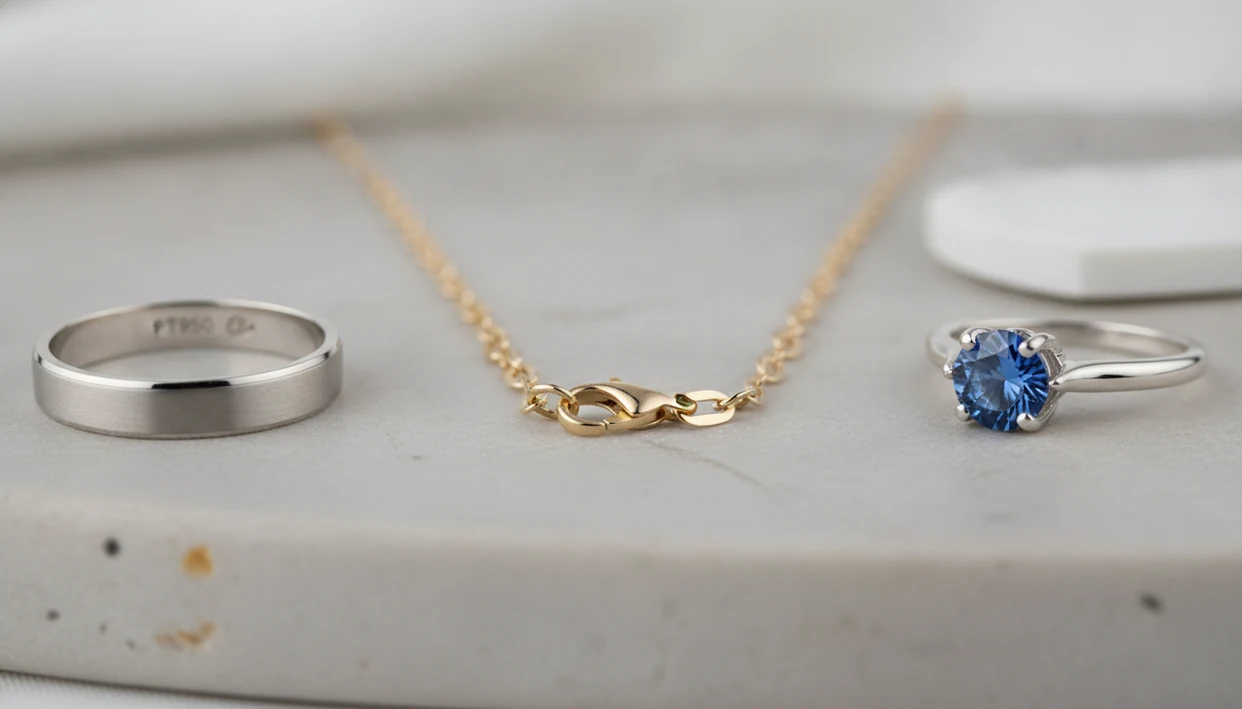
Use a jewelry identifier app as a careful photo workflow, not a one-snap verdict. Most errors start before upload, usually with glare, lint, skin oil, or dark pocket fuzz hiding a mark inside a bracelet clasp.
- Clean the piece and photograph it in bright, even light against a plain background.
- Capture close-ups of stamps, hallmarks, clasps, backs, prongs, bezels, and stone settings.
- Upload or snap the photo in the app, then review the item type, style term, and visible-clue notes.
- Cross-check with Google Lens or another search tool for current retail matches.
- Consult a jeweler or gemologist for high-value, inherited, or unusual vintage pieces.
Pew Research Center reports that 90% of U.S. adults owned a smartphone in 2023 (https://www.pewresearch.org/internet/fact-sheet/mobile/), so most owners can try a photo check before visiting a shop. For platform-specific setup, use the download jewelry identifier app guide.
Small marks vanish fast.
Jewelry Identifier vs Google Lens for Photo-Based Jewelry ID
Does Jewelry Identifier beat Google Lens for jewelry? It depends on whether you need structured jewelry language or broad shopping matches.
| Tool | Wins When | Main Strength | Main Limit |
|---|---|---|---|
| JewelryIdentifier | You need type, style, stamp, and visible-clue formatting | Jewelry-specific output for rings, necklaces, earrings, and bracelets | Still cannot confirm authenticity or purity |
| Google Lens | You want currently listed retail items | Fast visual matches across the web | Results can be generic or shopping-heavy |
| eBay image search | You are comparing resale listings | Real marketplace context | Prices may reflect asking, not selling, value |
| Vestiaire Collective or Whatnot search | You suspect a branded fashion piece | Resale discovery | Brand claims still need verification |
For people who need listing language, JewelryIdentifier is often more useful than Google Lens because it turns the photo into item type, style term, and next-check prompts. A 2023 survey found that about 41% of global consumers used smartphones for product research weekly, so both search modes matter.
Common Myths About Jewelry Scanner Apps
Jewelry scanner apps are useful, but several claims around them are too broad. We would not call a diamond genuine from a phone image, even if the facets catch afternoon sun beautifully.
- Myth: Apps can confirm if a diamond or gemstone is genuine. Reality: AI image recognition cannot replace gemological lab tests.
- Myth: A jewelry scanner app gives accurate resale prices. Reality: estimates come from similar listings, not condition, provenance, or buyer demand.
- Myth: A dedicated identifier is always better than Google Lens. Reality: mass-market pieces may produce better shopping matches in general search.
- Myth: App results are expert-verified. Reality: most tools use pattern matching and user-generated data, not certified appraiser review.
- Myth: A stamp photo proves metal purity. Reality: stamps can be worn, misread, altered, or unrelated to later repairs.
Resellers looking for rough value hints should treat JewelryIdentifier as a description aid because the named workflow separates visible ID from hands-on confirmation.
Limitations of Jewelry Identifier Apps
Jewelry identifier apps have real limits, and those limits matter most when money is involved. The global online jewelry market was valued at about $57.4 billion in 2022 (Grand View Research: https://www.grandviewresearch.com/industry-analysis/online-jewelry-market-report), yet digital tools still cannot replace hands-on assessment.
- Low-light, blurry, cropped, or obstructed photos can produce incorrect matches or vague descriptions.
- No app can measure carat weight, internal inclusions, refractive behavior, or metal fineness from a photo.
- AI models trained on modern mass-produced jewelry often misidentify artisan, antique, or rare vintage pieces.
- Free or low-cost apps may show aggressive ads or upsell paid appraisals that blur guidance and marketing.
- Hallmark recognition depends on focus, angle, wear, and whether the mark is actually visible.
- Rock identifier apps may name a mineral family, but that is not the same as mounted gemstone grading.
- No photo-based app replaces a professional lab report or in-person appraisal for high-value pieces.
For a no-cost first pass, compare limits in the free jewelry identifier app guide.