
How Much Is It Worth From a Photo?
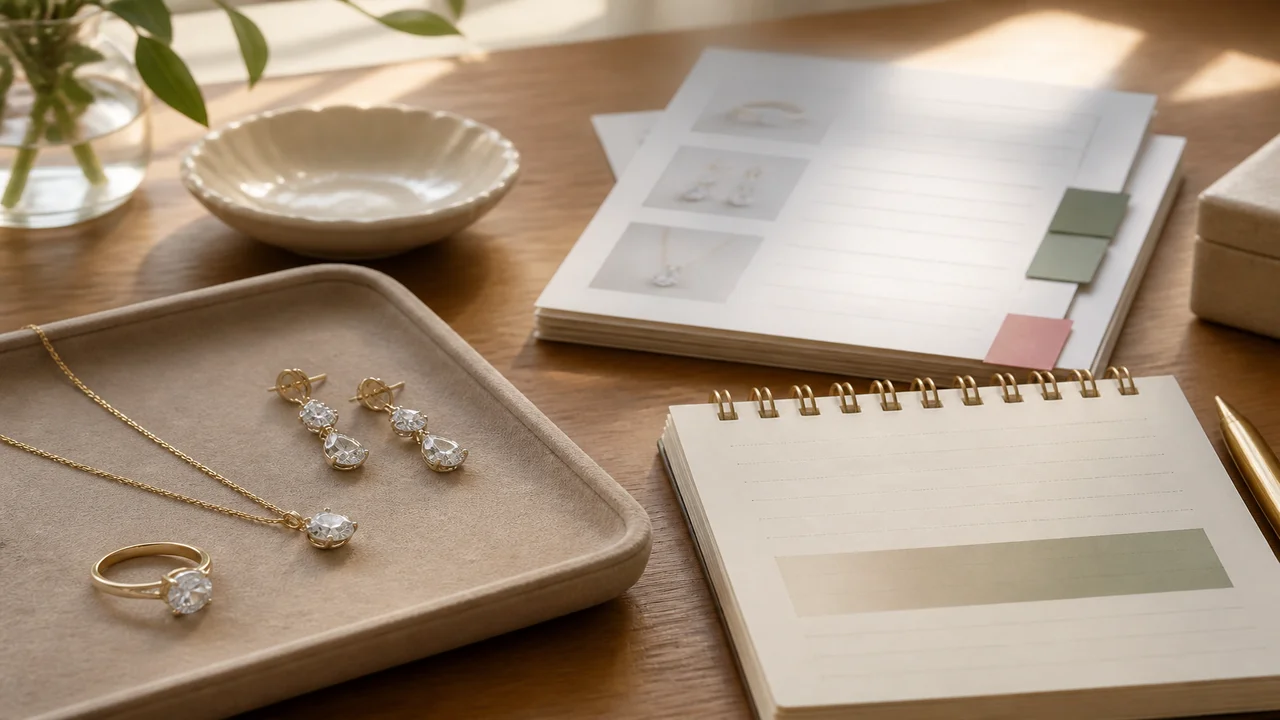
To estimate how much jewelry is worth from a photo, identify the piece as narrowly as possible, record weight and condition, gather marks and paperwork, then compare recent completed sales of genuinely similar items. The result is a current market range—not a guaranteed sale price or professional appraisal.
Important: Jewelry Identifier is a photo identification app. It is not a certified appraisal, assay office, or gemological laboratory.


How much is it worth today
Value is what an informed buyer is likely to pay in a specific market right now. That can differ from the original retail price, replacement cost, scrap floor, or an insurer’s scheduled amount. Start with the photo to establish category, style, maker clues, and visible condition, then move to evidence of completed sales.
Use category guides when the piece is clear: how much is my ring worth, how much is my necklace worth, or how much is my diamond worth. This page is the hub for the general question “how much is it worth?” across jewelry types.
A seven-step photo-to-value workflow
- Photograph the full piece plus marks, clasps, settings, damage, and a ruler.
- Identify type, style, maker leads, and visible stamps with a jewelry photo search.
- Record weight, dimensions, ring size or chain length, and included accessories.
- Search recent sold or completed listings for the same item before widening to close comps.
- Remove misleading comparisons: wrong metal claim, different size, sealed collector examples, broken lots.
- Group remaining sales by condition and completeness; take a middle range.
- Subtract fees, shipping, repair, or authentication costs if estimating net proceeds.
Write the estimate as a dated range with assumptions (“14K stamp not tested,” “center stone unconfirmed”). Markets move; yesterday’s viral listing can cool quickly.
Which price evidence should you trust?
| Evidence | What it tells you | How to use it |
|---|---|---|
| Recent sold listing | A buyer completed a purchase | Strongest everyday comparable when identity matches |
| Auction result | Market-clearing price on a day | Check buyer premium and lot contents |
| Active asking price | Seller expectation | Context only—not proof of value |
| Trade-in / scrap quote | Fast wholesale-style floor | Useful lower bound for tested precious metal |
| Original retail price | Historic new price | Context only |
| Professional appraisal | Purpose-specific opinion | Insurance, estate, tax, legal, high-value pieces |
Resale value is not retail price comparison
Retail asks what a store charges for a new product. Resale asks what this used piece may bring in its present condition. Completeness, repairs, missing stones, and seller trust change the number. A mini or broken piece is not a comparable for a complete set.
For the difference between informal estimates and formal reports, read jewelry appraisal app vs professional appraisal.
What a jewelry photo can and cannot prove
| A photo can support | A photo cannot certify |
|---|---|
| Likely category, style, and setting vocabulary | Metal purity or plating |
| Visible stamps and maker-mark leads | Authenticity of stamps or brands |
| Apparent stone shape and visible damage | Gemstone species, grade, or treatments |
| Candidate comparable designs | Guaranteed sale price or insurance value |
Authenticity checklists such as how to tell if a ring is real and real gold photo checklist come before confident pricing language.
Choose the right worth guide for your piece
- How much is my ring worth — settings, shanks, stones, ring-specific comps
- How much is my necklace worth — chain weight, clasps, pendants
- How much is my diamond worth — reports, 4Cs limits, mounted vs loose
- Inheritance organizers — sorting estate lots before appraisal
Estimate, not appraisal
This page describes informal resale research. Photos can mislead, model identification can be wrong, and online sales data can omit returns. Seek a qualified appraiser or gemologist for insurance schedules, estates, donations, divorce, or any piece where a mistake is costly.
Jewelry Identifier can help turn a photo into searchable identity clues. It does not issue certified appraisals or laboratory grades.
Frequently Asked Questions
Can a photo tell me how much jewelry is worth?
A photo can support a resale estimate after you identify the piece, document condition, and compare recent sold listings. It cannot produce a certified appraisal or verify metal and gemstones alone.
Is an Invy-style photo value the same as an appraisal?
No. Jewelry Identifier helps identify pieces and organize research. Formal appraisal, insurance, estate, tax, and legal values require a qualified professional.
Should I use asking prices or sold prices?
Prefer recent completed sales. Asking prices show seller hopes; sold prices show what buyers paid.
How do I estimate a ring vs a necklace?
Use the same evidence steps—identity, weight, marks, stones, condition, comps—but apply category pages for ring-, necklace-, or diamond-specific factors.
When do I need a professional appraisal?
For insurance, estates, tax, divorce, high-value sales, or whenever authenticity and materials must be proven.
Does Jewelry Identifier give a dollar value?
It supports photo identification and research. Any dollar range you calculate from comps is an informal estimate you document yourself.