
How to Tell If a Ring Is Real: Metal, Stones, Stamps, and Construction
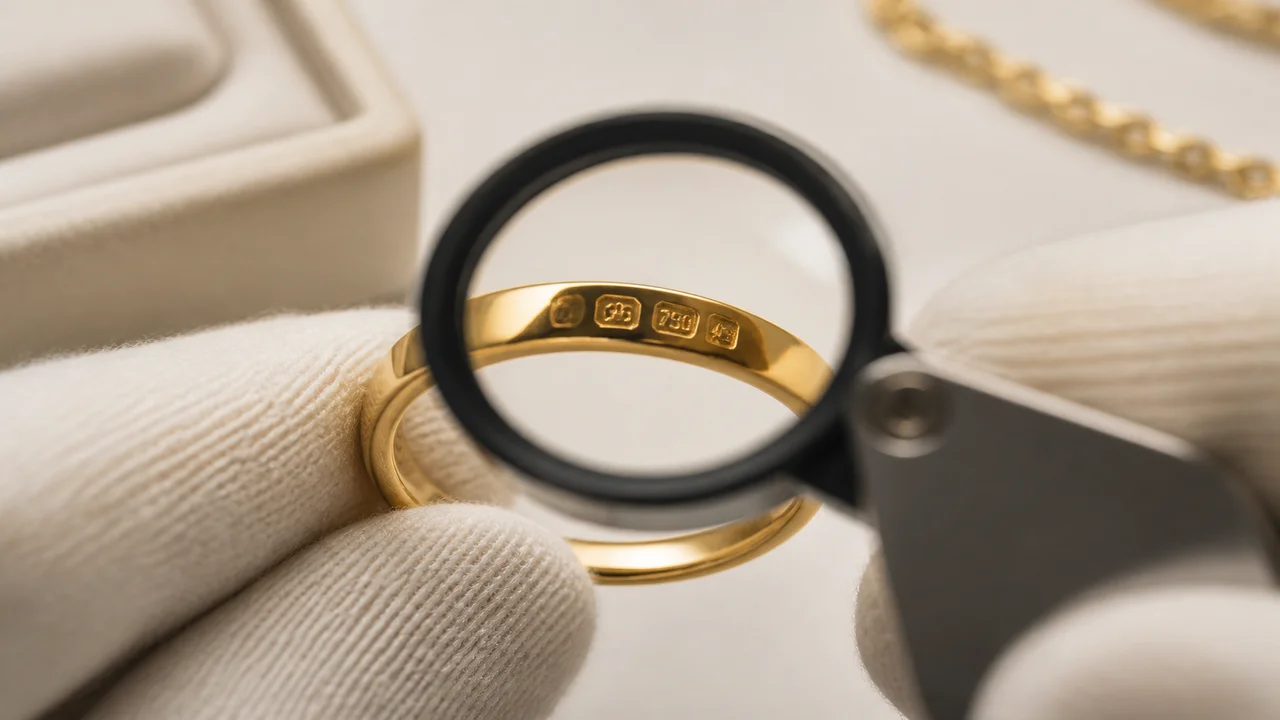
“Real ring” can mean several things: precious rather than plated metal, natural rather than imitation stone, authentic designer manufacture, or simply a functional piece of jewelry rather than a prop. Define the claim first, then collect evidence for metal, stones, stamps, construction, and history separately.
Boundary: Jewelry Identifier is a photo identification aid, not a certified appraisal, assay, authentication service, or gem laboratory. A phone photo cannot prove purity, gemstone species, treatments, origin, or monetary value.


Start by Defining What “Real” Means
| Question | Evidence needed | Who can confirm it |
|---|---|---|
| Is the metal solid gold, silver, or platinum? | Hallmarks plus non-destructive material tests | Jeweler or assay professional |
| Is the stone diamond or a named gem? | Gemological instruments and examination | Gemologist or laboratory |
| Is it a genuine branded ring? | Marks, serial, construction, provenance, archives | Brand or specialist authenticator |
| Is it antique or from a claimed era? | Construction, marks, wear, records, comparison | Qualified antique-jewelry specialist |
| What is it worth? | Verified identity, condition, market, comps | Qualified appraiser |
This whole-ring checklist is broader than a gold-only or diamond-only test. For those narrower questions, use the real-gold photo checklist and the diamond authenticity guide.
Metal Checklist: Color, Wear, Weight, and Tests
Begin with color consistency. Look inside the band, under the head, along edges, and at high-friction areas. A different color showing through can indicate plating, but some solid alloys develop surface changes and old repairs can introduce another metal. White gold may be rhodium plated, so wear does not automatically make it fake.
- Record total weight and dimensions; compare only with rings of similar size and construction.
- Look for flaking, bubbling, green residue, exposed copper color, solder seams, and discolored sizing sections.
- Use a magnet only as a screening clue. Attraction can reveal some steel components; no attraction proves nothing.
- Do not scratch an unknown ring on ceramic, apply household acid, use bleach, or heat it. These can damage metal, stones, patina, and settings.
- Ask a professional about XRF or other appropriate tests when purity matters.
A precious-metal stamp supports a hypothesis. The metal test confirms or challenges it.
Stone Checklist: Appearance Is Not Identity
Photographs can show a round, oval, emerald-cut, cabochon, cluster, or carved stone. They can reveal abrasion, chips, glue, worn foil backing, uneven facets, and a setting designed for a particular shape. Those observations help describe the ring but do not establish the mineral.
- Clean only with a method safe for the unknown stone; porous and treated gems can be damaged by soaking or ultrasonic cleaning.
- Photograph face-up, profile, underside, and under diffused light without filters.
- Check whether the stone is prong-, bezel-, channel-, or glue-set and whether the construction matches the claimed quality.
- Record visible inclusions and damage without interpreting them as proof of “natural.”
- Use a jeweler or gemologist for refractive, conductivity, microscopic, spectroscopic, or laboratory testing.
Sparkle does not prove diamond. Bubbles do not always settle every question. A report number should be checked against the issuing laboratory and matched to the stone where possible.
Stamps and Maker Marks Checklist
Inspect the inside shank, exterior band, shoulder, gallery, and underside of the setting. Photograph marks straight-on and at slight lighting angles. Common clues include fineness numbers, karat marks, assay symbols, maker initials, trademarks, patent references, size marks, and repair inscriptions.
| Mark type | Possible meaning | Limit |
|---|---|---|
| 10K, 14K, 18K, 750 | Claimed gold fineness | Can be false or attached to plated work |
| 925, Sterling | Claimed sterling silver | Does not identify maker or age |
| PT, PLAT, 950 | Possible platinum claim | Exact system varies by country |
| Maker logo or initials | Manufacturer lead | Initials overlap and marks are copied |
| Serial or report number | Record lookup lead | Number alone does not authenticate the ring |
Use a jewelry stamp identifier to generate search terms, then verify against authoritative hallmark references, brand archives, or the manufacturer.
Construction Checklist for the Whole Ring
Construction connects the metal, stone, and age claims. Study whether the ring was cast, hand-fabricated, assembled, resized, repaired, or altered. Fine workmanship can support a quality assessment but does not prove precious materials or a famous maker.
- Prongs and bezels: Are they even, secure, and consistent with age, or recently replaced?
- Gallery and shoulders: Is the work crisp, pierced, molded, rough, or visibly soldered?
- Shank: Look for thinning, sizing seams, porosity, cracks, and mismatched metal.
- Stone seats: Glue on a ring claimed as fine jewelry deserves explanation, although legitimate exceptions exist.
- Wear: Natural wear should make sense for exposed edges and contact points; artificial aging can be inconsistent.
Photo identification can suggest a setting or era. See how to identify ring style with a phone, but do not turn a style match into an authenticity claim.
What a Photo or App Can and Cannot Prove
| Can support | Cannot prove |
|---|---|
| Ring type, setting, stone shape, visible wear | Metal purity or plating depth |
| Readable stamps and maker-mark candidates | That marks are genuine |
| Possible construction and era clues | Exact date or unbroken provenance |
| Obvious damage and missing components | Hidden repairs or internal stone treatments |
| Similar-looking examples | Gem identity, brand authenticity, grade, or value |
Safe Verification Workflow
- Write the exact claims you need to verify: metal, stone, maker, age, or value.
- Take a complete photo set and transcribe marks without “correcting” unclear characters.
- Record measurements, weight, condition, documents, and known history.
- Use photo tools to find vocabulary and comparison candidates.
- Check maker and serial leads privately with authoritative sources; do not post full serials publicly.
- Get appropriate hands-on tests, then obtain an appraisal if a monetary decision requires one.
If value is the next question, follow how much is my ring worth. Keep “appears to be” separate from “tested as” in every note and sale listing.
Frequently Asked Questions
Can a photo tell if a ring is real?
A photo can reveal style, stamps, wear, and construction clues, but it cannot certify metal purity, gemstone identity, brand authenticity, or value.
Does a 14K stamp prove a ring is gold?
No. A 14K stamp is useful evidence but can be false, added, worn, or attached to plated jewelry. Confirm important pieces with professional metal testing.
How can I tell whether the stone is real?
Inspect setting quality, wear, chips, inclusions, and documentation, but do not rely on appearance alone. A jeweler or gemological lab must test and identify the stone.
Do magnets prove whether a ring is genuine?
No. A strong attraction can flag some base metals, but many non-gold metals are also nonmagnetic, and ring components may react differently.
When should I stop home checks?
Stop when the ring is valuable, fragile, antique, signed, inherited, or set with an unknown stone. Avoid destructive acids, scratching, heat, and unsafe chemical tests.