Jewelry Serial Number Lookup: Where to Find Numbers and How to Research Them
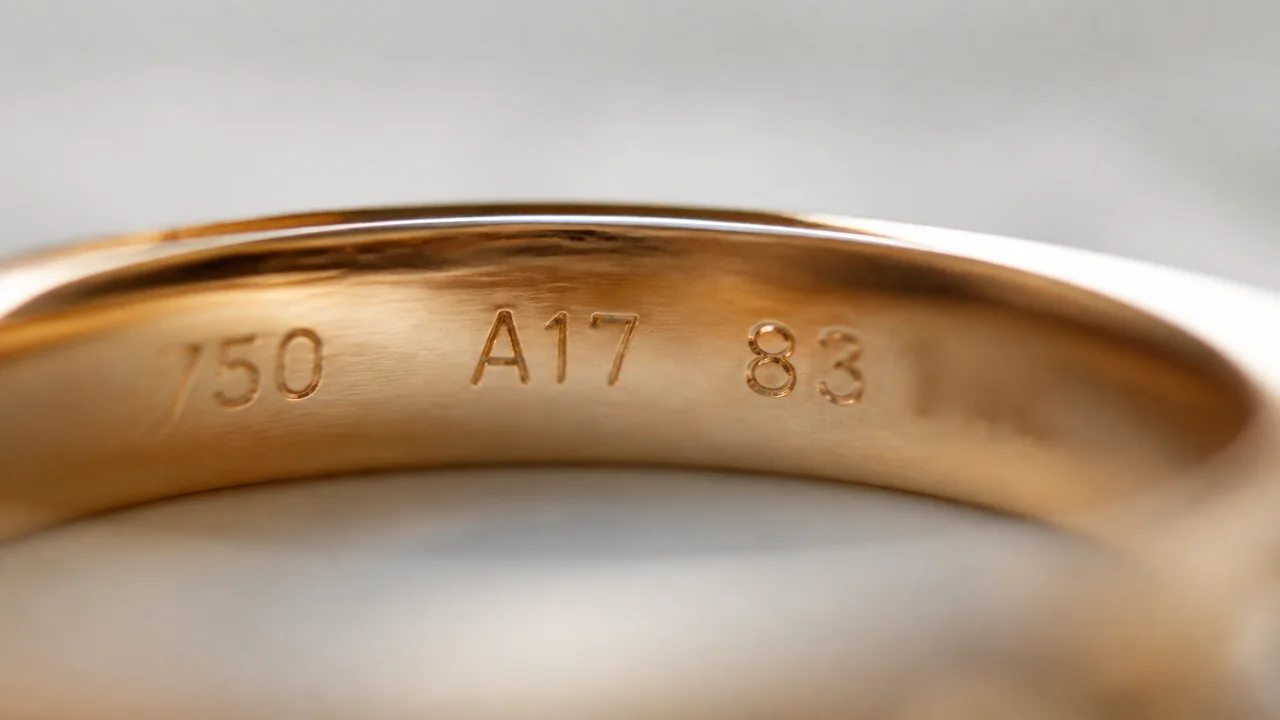
A jewelry number may be a unique serial, model reference, production code, assay mark, patent number, ring size, inventory code, or repair inscription. Correctly classifying the number is more important than simply typing it into a search engine.
Privacy first: Do not post full serials publicly. Redact several characters and remove names, addresses, receipts, location metadata, and other ownership details. Jewelry Identifier is not a brand-authentication service, certified appraisal, or laboratory grading provider.


Where Jewelry Serial Numbers Usually Appear
| Jewelry type | Places to inspect | Common confusion |
|---|---|---|
| Ring | Inside shank, outer band, under gallery | Ring size, karat, report inscription |
| Necklace | Clasp plate, end tag, pendant back or bail | Chain purity versus pendant number |
| Bracelet | Clasp tongue, safety catch, end link, inside panel | Patent or model reference |
| Brooch | Back plate, pin fitting, plaque edge | Design registration or inventory mark |
| Earrings | Post, clip back, inner hoop, detachable drop | Pair numbers or component marks |
| Watch jewelry | Case back, between lugs, movement, bracelet | Case, movement, and bracelet use different numbers |
Use oblique light and macro focus rather than aggressive cleaning. Lint and skin oil can hide characters, but polishing may erase shallow marks and reduce historical evidence.
Serial, Model, Hallmark, or Inventory Code?
A serial is typically intended to distinguish one item or production unit. A model or reference identifies a design shared by multiple items. A hallmark communicates maker, sponsor, assay office, date, or fineness under a marking system. An inventory number may have been added by a retailer, auction house, pawnshop, museum, or owner.
- Fineness: 925, 750, 585, 14K, or 950 usually concerns claimed material, not a unique serial.
- Patent/registration: “PAT,” “REG,” or a design number may identify an invention or registered pattern.
- Report number: A laboratory inscription can connect a stone to a grading record, subject to physical matching.
- Service mark: Repair dates, jeweler codes, or sizing notes may have no public database.
- Stock code: Hand-engraved or tagged inventory may only make sense in one seller’s records.
For mark interpretation, begin with a tool that can read jewelry hallmarks.
Privacy: Do Not Post Full Serials Publicly
A full serial can be copied into counterfeit listings, used to manufacture plausible documents, or connected with purchase and ownership information. Public photos can also reveal a home interior, location data, family paperwork, or a valuable collection.
- Keep an original high-resolution photo in a private inventory.
- For public questions, mask several middle characters: for example, AB12•••789.
- Remove EXIF location metadata and crop receipts, addresses, names, and account information.
- Share the complete number only with a verified brand, laboratory, insurer, appraiser, law-enforcement contact, or buyer when genuinely necessary.
- Record who received it, why, and through which secure channel.
Review jewelry photo upload safety before sending detailed collection images to any service.
Jewelry Serial Number Lookup Workflow
- Capture: Photograph the entire piece, number location, close-up, stamps, logo, clasp, and construction.
- Transcribe: Preserve capitalization, spaces, punctuation, leading zeros, and uncertain characters such as O/0 or I/1.
- Classify: Decide whether it looks like fineness, maker, model, report, patent, serial, or inventory data.
- Identify: Establish the likely maker using the object and mark together, not the number alone.
- Search official sources: Use brand support, archive, laboratory report check, assay-office reference, or patent database as appropriate.
- Compare: Confirm that model, dimensions, materials, date, and construction match the returned record.
- Escalate: Use a qualified authenticator, gemologist, or appraiser for consequential decisions.
Why Lookup Results Have Limits
There is no universal serial-number registry for all jewelry. Some makers never serialized pieces; others changed systems, kept private ledgers, reused model references, or no longer exist. Archive loss and mergers create gaps. A “no result” does not prove a fake, and a search hit does not prove a genuine item.
| Lookup result | Reasonable conclusion | Unsafe conclusion |
|---|---|---|
| Exact official record match | Record is consistent with supplied number | The physical item is automatically authentic |
| No result | Database may not cover the item | The jewelry is definitely counterfeit |
| Similar model appears | Useful comparison lead | Same maker, date, and materials proven |
| Report lookup works | A report with that number exists | The mounted stone is the reported stone |
| Number format looks right | Format deserves further review | Format alone authenticates the item |
What Photos and Apps Can and Cannot Prove
| Can support | Cannot prove |
|---|---|
| Reading visible characters | That a number is original or unaltered |
| Number location and engraving style | Brand authenticity |
| Maker-mark and model research leads | Ownership history or lawful title |
| Comparison with known examples | Metal, gemstones, grade, or exact age |
| Inventory documentation | Certified appraisal or market value |
Optical character recognition can misread shallow, curved, worn, or reflected marks. Always inspect the source image and keep uncertain characters marked as uncertain.
When to Contact a Brand or Specialist
Contact the brand for supported product references, repair eligibility, archive information, or current authentication options. Contact a gem lab about its own report number. Use a specialist authenticator for high-value designer jewelry and a qualified appraiser when value must be documented.
Provide clear private images, measurements, weight, acquisition history, and all marks. Never assume that customer support can authenticate from a number alone. If the number is one clue among several, a jewelry stamp identifier can help organize the remaining marks before expert review.
Frequently Asked Questions
Where are jewelry serial numbers located?
Common locations include inside ring bands, clasp plates, bracelet backs, watch cases, pendant backs, earring clips, and branded tags or certificates.
Can I look up any jewelry serial number online?
No. There is no universal jewelry serial database. Access and numbering systems vary by maker, product, country, and period.
Does a matching serial number prove authenticity?
No. Numbers can be copied, altered, reused, or attached to a different item. The whole object and its records must be examined.
Should I post a full jewelry serial number publicly?
Usually not. Share a redacted version in public and provide the complete number only through a trusted, necessary, private channel.
Can a photo app read serial numbers?
A clear macro photo may help transcribe visible characters, but the reading must be checked manually and does not authenticate the item.