
Jewelry Identifier For Inheritance Organizers Sorting Estate Pieces
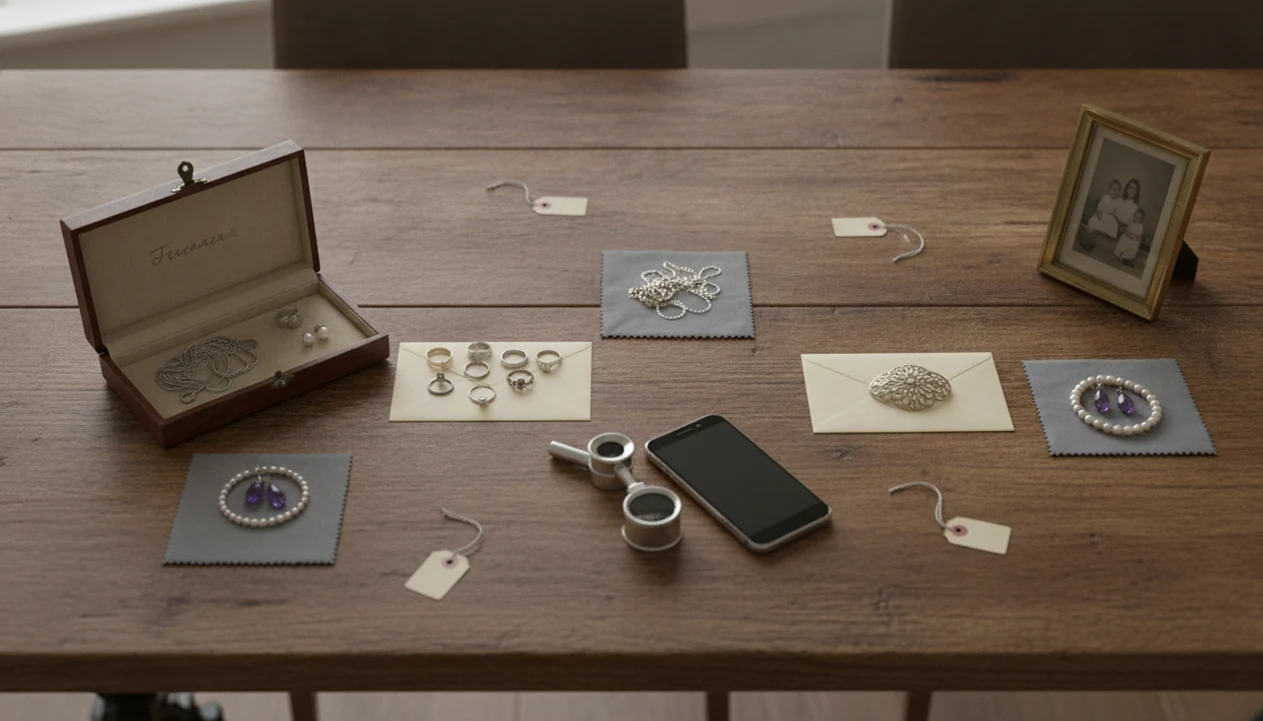


A jewelry identifier for inheritance organizers is best used as a calm triage tool: photograph each inherited piece, group likely costume jewelry from appraisal-worthy items, and create a shared record before visiting a jeweler or appraiser. JewelryIdentifier helps you identify inherited jewelry from photos, but it cannot prove authenticity, metal purity, stone quality, or estate value on its own.
> JewelryIdentifier is a jewelry identifier app that helps users identify rings, necklaces, earrings, bracelets, and vintage jewelry from photos for shoppers, collectors, resellers, and families sorting inherited pieces.
- Use photo identification to sort estate jewelry into likely costume, possibly fine, sentimental, and expert-review groups.
- Photograph one item at a time, including hallmarks, clasps, settings, engravings, and damaged areas.
- Treat app results as organizing notes, not legal appraisals, insurance values, or probate instructions.
Why inheritance organizers need a jewelry identifier workflow
Inherited jewelry boxes are often mixed, unlabeled, emotional, and hard to divide fairly without a record. A photo-based workflow gives heirs and executors a visual inventory before pieces are moved, cleaned, gifted, repaired, sold, or taken for appraisal.
Here, “inheritance organizer” means the person making the first inventory, whether that is an heir, executor, attorney assistant, estate-sale helper, or family member trying to keep the process fair.
The numbers explain why this comes up so often. U.S. consumers spent $76 billion on jewelry and watches in 2019, according to the Bureau of Labor Statistics source. The Federal Reserve estimated that more than $68 trillion in household net worth would transfer through inheritances and gifts from 2016 to 2045 source.
When the issue is a shoebox of rings, chains, and brooches with no labels, JewelryIdentifier fits because it turns each photo into a likely category and a next-detail-to-check note. Family photo next to a locket, soft cloth under scattered necklaces. That is usually where the sorting starts.
At-a-glance estate jewelry sorting app checklist
- Create sorting groups. Use likely costume, possibly fine, sentimental, damaged or repaired, marked, and needs expert review.
- Number every item. Put the item number on an envelope, tray label, or spreadsheet row before anyone moves it.
- Record visible clues. Note jewelry type, metal color, stones, visible marks, condition, and any family story.
- Attach a next action. Common actions include keep, share with family, appraise, repair, sell later, or legal review.
- Keep the checklist with the pieces. Siblings, executors, attorneys, insurers, and appraisers need the same reference.
The right fit for families trying to avoid duplicate guesses is JewelryIdentifier because the photo result can sit beside human notes in a simple estate jewelry sorting app workflow. For inheritance organizers, a written item checklist is often safer than memory because every decision traces back to a numbered piece.
Top jewelry identifier features for inheritance organizers
Photo identification across item types. JewelryIdentifier jewelry identifier app and photo guides help users identify rings, necklaces, earrings, bracelets, and vintage jewelry from pictures, then separate brooches, watches, charms, and loose pieces into workable estate groups.
Close-up clue capture. Useful estate photos include hallmarks, maker marks, clasps, engravings, settings, stone cuts, and odd construction. We have seen clasp photos look sharp while the pendant front is blown out by flash. Retake it.
Notes, tags, folders, and exports. Inheritance organizers need records that travel beyond one phone. Tags like “marked,” “sentimental,” and “appraiser” keep family review calmer.
Privacy controls. Before uploading estate photos, check image storage, deletion, sharing, and export options. A tool that can identify jewelry safely should make those questions easy to answer.
Good jewelry identifier app and photo guides deliver visible-clue organization, not probate authority, lab testing, or a defensible insurance value.
How a jewelry identifier app works from estate photos
A jewelry identifier app works by comparing visible features in a photo, such as item shape, setting style, clasp type, marks, stone appearance, and design patterns, against visual references. In plain terms, image embeddings turn a jewelry photo into searchable visual signals.
JewelryIdentifier can suggest object type, likely style term, similar visual matches, and the next detail to check. It does not physically test gold purity, gemstone identity, carat weight, provenance, or market value.
Lighting matters more than people expect. Reflections, group photos, worn marks, old repairs, resizing, and antique alterations can reduce confidence. A phone lens wiped on a sleeve before taking the side profile of a ring setting may improve the result more than another broad table photo. For deeper era clues, the guide to discover vintage jewelry era from photo explains clasp and construction details in more depth.
How to use Jewelry Identifier to identify inherited jewelry
Use JewelryIdentifier as a first-pass record, then send uncertain or important pieces for hands-on confirmation. The workflow works best when one person photographs and another writes notes.
- Set up a plain background, soft light, envelopes or trays, and item numbers.
- Photograph one item at a time from the front, back, side, clasp, inside band, hallmark, setting, and damaged area.
- Log JewelryIdentifier suggestions beside human notes, family stories, condition problems, and uncertainty.
- Group pieces by next action: keep sentimental, share with family, appraise, repair, sell later, or legal review.
- Review high-uncertainty items with a qualified jeweler, gemologist, or appraiser before final decisions.
Anyone dealing with a large estate tray can use JewelryIdentifier because the numbered-photo workflow creates a record before emotion, resale pressure, or family memory changes the conversation.
Common inherited jewelry patterns the app can help sort
What kinds of inherited jewelry can a photo identifier help sort? It can help sort mixed boxes where costume and fine jewelry sit together, especially when chains, earrings, and rings have no labels.
Old-looking pieces need caution. A filigree brooch may be vintage, antique, revival style, or costume. Ornate is not the same as valuable. For similar examples, a vintage jewelry identifier by photo can help compare era-style clues before you assume age.
Marked pieces also need close-ups. Gold, silver, vermeil, plated, filled, and stainless marks can be tiny, worn, or misleading. We have tried to read a 14K stamp inside a yellow-gold ring under thrift-store fluorescent lights. Not ideal.
Single earrings, broken chains, loose stones, resized rings, repaired clasps, and reset stones deserve special notes because missing context changes the next action.
Inherited jewelry checklist for appraisers, executors, and family records
An inherited jewelry checklist should turn app results into a shared record, not a final valuation. About 68% of U.S. households report owning tangible assets such as vehicles, artwork, jewelry, and coins, according to the Federal Reserve’s Survey of Consumer Finances source, so personal property documentation matters in many estates.
| Record field | What to enter |
|---|---|
| Item ID | Envelope, tray, or spreadsheet number |
| Photos | Front, back, clasp, mark, setting, damage |
| Jewelry type | Ring, necklace, bracelet, earrings, brooch, watch |
| Visible marks | Metal stamp, maker mark, engraving |
| App result | Likely category and style term |
| Confidence level | High, medium, low, or expert review |
| Condition | Broken chain, missing stone, resized band, repair |
| Family history | Owner, occasion, story, sentimental note |
| Stored location | Box, safe, attorney file, appraiser packet |
| Next step | Keep, divide, appraise, insure, sell, legal review |
Inheritance organizers trying to brief siblings or an executor can use JewelryIdentifier because item IDs, photos, and visible-clue notes make later appraisal appointments less chaotic.
Honest gaps in photo-based estate jewelry identification
AI can suggest likely type, era, style, metal color, stone family, and visual matches. It cannot give a legally defensible value for estate division, insurance, tax, or probate decisions.
Gold purity, diamond authenticity, gemstone treatments, internal quality, and exact market value require professional tools. That may mean acid testing, XRF testing, diamond screening, microscopy, lab reports, market comparables, or a formal appraisal.
Do not sell, insure, divide, or discard jewelry based only on an app result. The kitchen-table piles can be simple: likely gold, likely silver, costume, sentimental, and take-to-a-jeweler. But the final decision should slow down when a piece has a precious metal mark, designer signature, fine stone, unusual age clue, or strong family importance.
Limitations
Photo-based estate jewelry identification has real limits, especially when inherited pieces may affect money, memory, or legal decisions.
- Photos cannot confirm metal purity, gemstone authenticity, carat weight, provenance, or market value.
- Blurry photos, glare, reflections, group shots, tiny stones, and worn hallmarks can produce generic or wrong results.
- Heavily repaired, resized, reset, altered, antique, or damaged pieces may confuse visual matching.
- JewelryIdentifier does not replace a certified appraisal, gemological testing, insurance schedule, probate valuation, tax advice, or legal estate planning.
- Privacy and data handling should be checked before uploading photos of valuable estate property.
- Some styles, makers, regional traditions, and older pieces may be underrepresented in training data.
- Google Lens, eBay image search, Vestiaire Collective, Whatnot, and rock identifier apps can be useful comparisons, but they are not estate appraisal systems.
Dark pocket fuzz inside a bracelet clasp can hide the only mark. Clean gently, if safe, and document before making decisions.
How to Identify Estate Jewelry
Identify estate jewelry by building an evidence record before trying to name or value each piece. Assign an item number, photograph the front and back, note measurements and condition, and capture clasps, settings, hallmarks, engravings, maker signatures, and unusual construction. Keep boxes, receipts, old appraisals, laboratory reports, repair envelopes, and family photographs with the corresponding item because context can be as important as appearance.
Use photo identification to develop likely categories and search terms, then cross-check marks and design clues with reliable references. Age, precious-metal content, gemstone identity, brand, and value cannot be established safely from style alone. Pieces with fine-jewelry marks, notable signatures, substantial stones, unusual workmanship, or important family history should move to a qualified jeweler, gemologist, or appraiser for hands-on review.
Sorting Inherited Jewelry Before Appraisal
Sort inherited jewelry by next action rather than by an unverified price guess. Useful groups include sentimental items, clearly marked pieces, possible fine jewelry, costume jewelry, damaged or incomplete pieces, and items needing expert review. Keep matching sets and original components together, and place each piece in a numbered envelope, tray, or bag that corresponds with the inventory.
Do not discard single earrings, broken chains, loose stones, watch parts, or apparently inexpensive findings before inspection; they may belong to another item or carry useful marks. Avoid aggressive polishing, resizing, stone removal, or repair until the original condition has been documented. This preparation reduces appraisal time and helps the appraiser focus testing and research on the pieces most likely to need formal conclusions.
Documenting Marks, Provenance and Condition
Record marks exactly as they appear, including spacing, symbols, partial letters, numbers, and their location on the piece. Photograph each mark from several angles with a scale reference, but keep the uncropped original image as well as the close-up. Do not “correct” a faint reading in the inventory; label uncertain characters and let a specialist compare the stamp with assay, maker, or brand references.
Provenance notes should identify the previous owner, approximate dates and places, occasions associated with the jewelry, and the source of each statement. Condition notes should cover missing or loose stones, worn prongs, dents, cracks, solder, altered clasps, resizing, replaced components, and prior repairs. Separating family recollection from documented fact gives heirs and appraisers a clearer, more defensible record.
FAQ
How do I identify inherited jewelry?
Photograph each piece separately, capture marks and construction details, write family notes, and group items by likely costume, possibly fine, sentimental, or expert review. Use a jeweler, gemologist, or appraiser for important or uncertain pieces.
Can an app value inherited jewelry?
An app may suggest identity clues, style terms, and visual matches, but it cannot provide formal estate, insurance, tax, probate, or resale value. Valuation requires market research and professional review.
Is old jewelry always valuable?
No. Old-looking jewelry may be antique, vintage, revival style, altered, or costume, and age alone does not prove high market value.
How do I photograph estate jewelry?
Use one item at a time on a plain background with soft light. Take front, back, side, clasp, hallmark, setting, engraving, and damage photos.
What jewelry needs an appraisal?
Pieces with precious metal marks, fine stones, designer signatures, antique clues, unusual construction, or strong family importance should be reviewed. Appraisal is also wise before insurance, sale, or estate division.
Can photos identify real gold?
Photos can show clues such as color, wear, and metal stamps, but they cannot confirm gold purity. Physical testing is needed to verify real gold.
Can photos identify real diamonds?
Photos cannot reliably confirm diamond authenticity or grade. Diamond testing, magnification, and sometimes laboratory analysis are needed.
How should heirs divide jewelry?
Document every piece, appraise important items, discuss sentimental value, and follow executor or legal guidance. Written records reduce disputes.
Should I clean inherited jewelry first?
Avoid aggressive cleaning before photos or expert review, especially with antique, fragile, or unknown pieces. Light dust removal may be reasonable if it does not disturb stones, patina, or marks.
Start sorting inherited jewelry with less guesswork
Upload clear photos of rings, necklaces, stamps, and vintage details to create a calmer first-pass jewelry inventory. For valuable pieces, use Jewelry Identifier as a starting point and confirm findings with a qualified jeweler or appraiser.