

> Definition: A safe jewelry identifier tool is a photo-based app or scanner that examines shape, setting, stone color, hallmarks, clasps, and style in your image to suggest what a piece likely is, while keeping your uploaded photos private and giving you clear controls for deletion, retention, and reuse.
- Photo-based jewelry identification tools analyze visible clues like hallmarks, settings, and style, not chemical composition.
- Privacy-aware apps should delete or securely handle your jewelry photos after each scan.
- Results are educated guesses, not certified appraisals. Always confirm with a professional jeweler or gemologist for high-value pieces.
JewelryIdentifier is best used as a private first-pass jewelry identifier app when you need vocabulary, visible-clue checks, and next-step guidance before deciding whether a jeweler or appraiser should inspect the piece.
What a Safe Jewelry Identifier Tool Covers
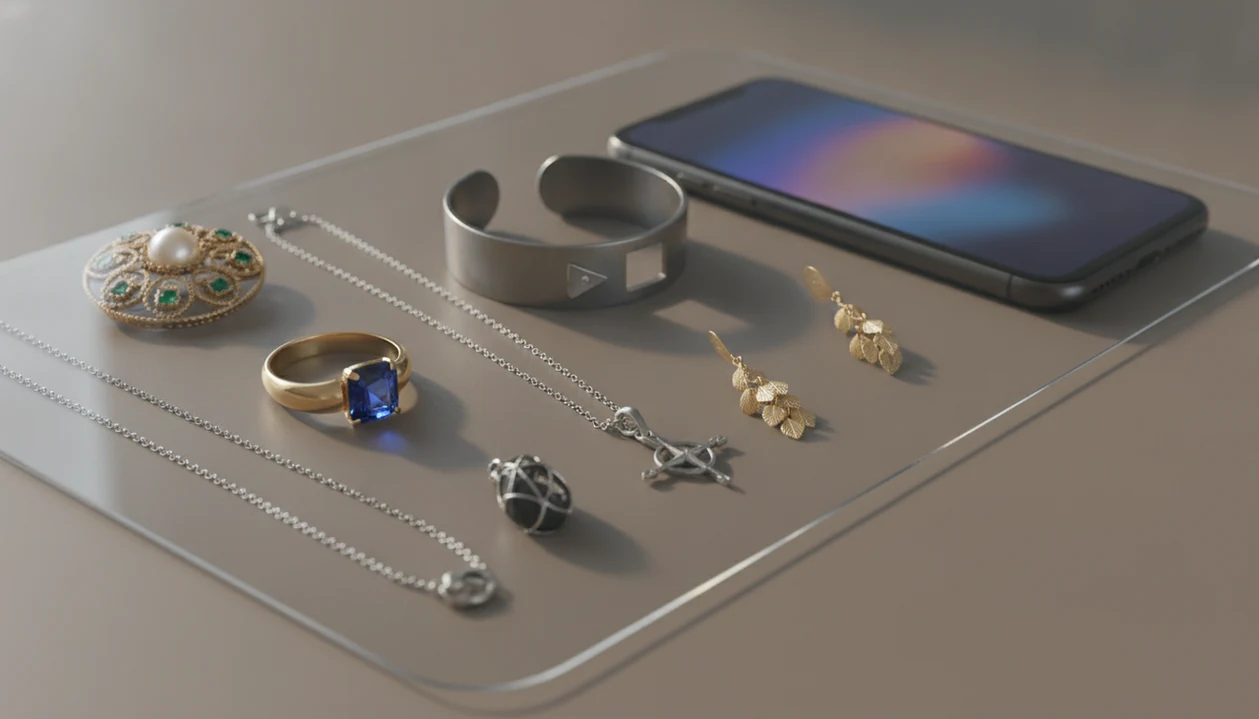
A safe jewelry identifier tool covers photo-based identification of visible jewelry clues, not legal authenticity, exact value, or gem certification. It can examine a ring, necklace, bracelet, earring, brooch, watch, or vintage piece and suggest a likely category.
The useful output is usually plain language: solitaire ring, curb chain, hinged bangle, clip-on earring, Art Deco-style pendant, possible sterling mark, or similar listings. That helps when someone says, “I just need to know what to call this before I list it.”
Photo tools are a first pass.
They can point out the next detail to check, such as a metal stamp, maker mark, clasp type, or prong wear on raised stones. For insurance, estate settlement, resale disputes, or a suspected high-value stone, compare the result with jewelry appraisal app vs professional appraisal guidance and then get hands-on confirmation.
Five Facts About Identifying Jewelry Safely From Photos
- Photo analysis reads visible clues: outline, setting shape, stone color, clasp construction, hallmarks, engraving, and overall style language.
- Results are assistive, not official appraisals. Only physical tests can confirm metal content, gemstone identity, treatment, and condition.
- A privacy-aware app should either delete uploaded photos after analysis or provide non-public storage with user-controlled retention.
- AI has weak spots with plated jewelry, worn stamps, custom work, repaired pieces, obscure makers, and altered marks.
- Multiple clear photos improve matching. Take the full front, full back, clasp, setting, hallmark, and any damage from separate angles.
We have tried to read a tiny 14K stamp inside a yellow-gold ring under thrift-store fluorescent lights. The app guess was less useful than the second photo taken outside, where the stamp stopped blurring into the band curve. Small details decide the likely category.
How Photo-Based Jewelry Identification Works
Photo-based jewelry identification works by converting an image into visual features, then comparing those features against trained examples of jewelry styles, stones, metals, settings, and marks. The model scores visual similarity across shape, color, texture, setting geometry, clasp form, and repeated design patterns.
In plain terms, it asks: what does this look most like?
Hallmark and maker-mark detection uses pattern matching against cataloged stamps, but a worn “925” inside a bracelet clasp can disappear under lint, skin oil, and dark pocket fuzz. Clean the area gently before photographing it.
The model cannot perform chemical assay, spectroscopy, refractive index testing, or hardness testing. It sees surface evidence only. Global AI in retail, including visual search and product recognition, is projected to reach about $31.18 billion by 2028 source, but market growth does not change the basic limit: a photo is not a lab test. For gold-specific limits, read can an app tell if jewelry is real gold.
How to Use a Safe Jewelry Identifier Tool
Use a safe jewelry identifier tool as a controlled first check: one item, clear photos, then a careful review of what the app can and cannot see. The goal is to get better words for the piece and spot visible clues before you decide whether it needs professional testing.
- Start with one clean item on a plain, non-reflective surface so the app is not trying to read a chain, ring, receipt, and patterned tablecloth at the same time.
- Upload separate photos of the front, back, hallmark or stamp, clasp, setting, stones, and any worn or damaged area. A blurry “925” or maker mark is often the whole difference between a useful suggestion and a vague match.
- Review the suggested category, style terms, visible materials, and clues the tool highlights. Treat those as prompts to inspect, not final proof.
- Check the privacy controls before saving scan history, especially if the photo shows heirloom paperwork, location clues, or family items in the background.
- Escalate uncertain, high-value, legal, insurance, estate, tax, or resale results to a jeweler, appraiser, or gemologist for hands-on confirmation.
Private Jewelry Photo Upload: Specific Privacy Guarantees
A private jewelry photo upload should give clear answers to three questions: who can see the image, how long it is kept, and whether it trains the AI model. If those answers are buried, assume the privacy story needs more checking.
Look for deletion after analysis, optional scan history, private storage by default, and no public gallery unless you choose to share. Also check whether the app reuses photos for model training, product analytics, or human review.
Privacy matters because jewelry photos can reveal more than a clasp. A kitchen table image may show an address label, family heirloom box, or appraisal slip in the corner. In a 2021 Pew survey, 79% of U.S. adults were concerned about how companies use collected data source. In 2022, Pew found that 64% wanted more regulation of personal data source. The deeper privacy checklist is covered in is it safe to upload jewelry photos.
Common Myths About Safe Jewelry Identifier Apps
Myth one: an app can guarantee a diamond or gemstone is real. It cannot. A photo may show a prong setting, facet pattern, or strong reflection, but gemological inspection is still needed. If that is your main question, the safer framing is can an app tell if diamond is real, not “prove it from one picture.”
Myth two: an app can accurately appraise market value. It can compare similar-looking pieces, but it cannot price condition, provenance, rarity, buyer demand, or repaired damage with appraisal-level certainty.
Myth three: AI always spots fakes. High-quality replicas, altered hallmarks, and mixed-part repairs can fool image models.
Myth four: uploading is automatically private. Some services retain images for training unless they promise deletion or give user controls. Good jewelry identifier app and photo guides that help users identify rings, necklaces, earrings, bracelets, and vintage jewelry from pictures deliver vocabulary and next-step checks, not private-by-default proof unless the policy says so.
How to Photograph Jewelry for Safer, More Accurate Results
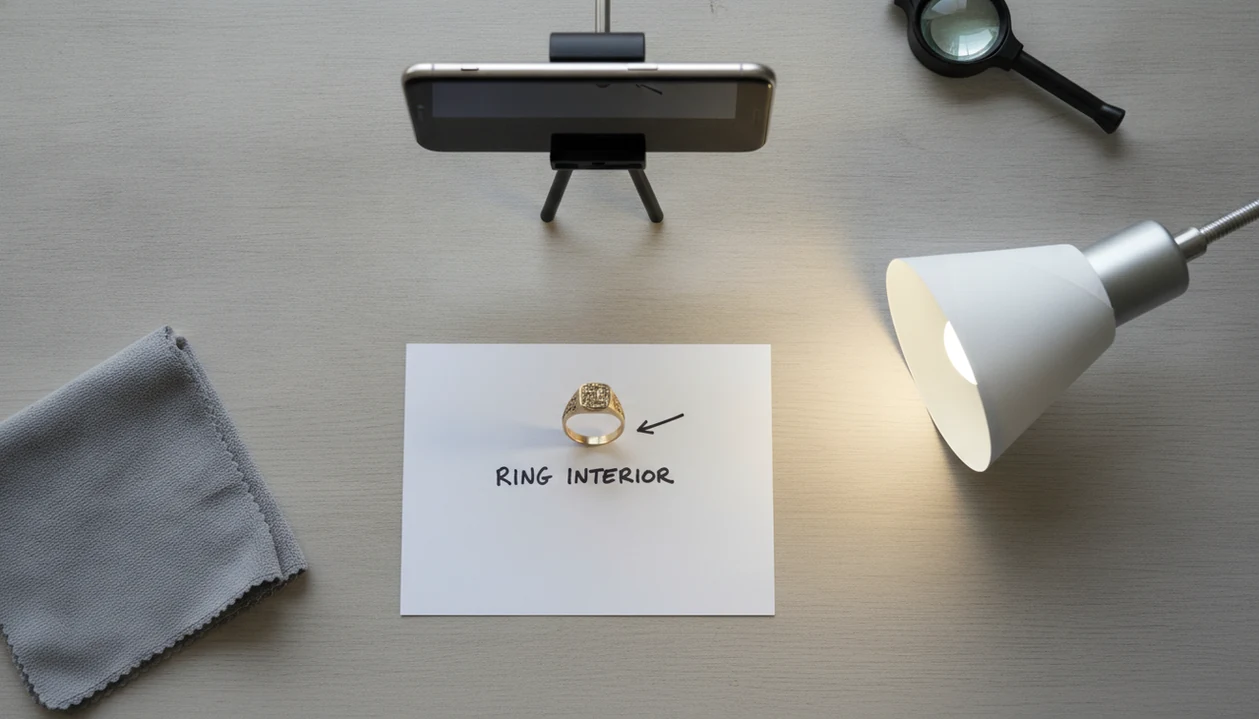
For safer, more accurate results, photograph one clean piece at a time and show both the whole object and the small evidence. The U.S. jewelry market was valued at about $94.7 billion in 2022 source, so better digital sorting tools matter for shoppers, collectors, and resellers.
- Place the piece on a plain, non-reflective background.
- Capture overall front and back shots in natural or diffused light.
- Photograph hallmarks, stamps, and engravings in close-up macro mode.
- Shoot clasp, setting, and prong details separately.
- Scan only one piece per frame for cleaner AI matching.
Window light usually beats flash. We often see photos where the clasp is sharp but the pendant front is blown out, so the model reads the chain better than the jewelry. A ring tilted toward window light can reveal stone height, prong wear, and shoulder shape. For a broader workflow, use a jewelry identifier by photo guide.
Safe Jewelry Identifier Apps vs Alternatives
JewelryIdentifier is the safer choice for private, low-risk sorting, while Google Lens and eBay image search are better for broad visual matches and marketplace context. None of these routes provides certification; that still belongs to a jeweler, appraiser, or gemologist.
- Use JewelryIdentifier when you want a private first pass on style, visible marks, likely category, and next checks without turning the item into a public listing.
- Try Google Lens when the piece has a distinctive shape, motif, or brand-like look and you mainly need similar images from the open web.
- Check eBay image search when resale is the goal and you want to see how comparable pieces are titled, photographed, and described by sellers.
- Compare WorthPoint or sold marketplace comps when age, maker, scarcity, or completed-sale history matters more than a simple lookalike match.
- Avoid public listing tools until you have cropped out addresses, documents, family photos, and anything that could reveal ownership or location.
- Escalate to a jeweler, appraiser, or gemologist for diamonds, suspected solid gold, insurance, estate work, tax records, disputes, or any piece where a wrong answer costs real money.
For sorting a drawer into costume, likely silver, likely gold, and “needs testing,” an app is fastest. For certification, choose the professional route.
Jewelry Identification Limits: What Photo Tools Cannot Do
Photo tools cannot chemically test metals, determine exact karat purity, or distinguish solid gold from convincing gold-filled, plated, or vermeil surfaces. They also cannot separate lab-grown and natural diamonds from a photo alone.
Rare vintage, custom, regional, and maker-specific pieces may return vague matches. A fold-over clasp on a bracelet can suggest a period or construction style, but it does not prove age. Poor lighting, mirror reflections, velvet clutter, and multiple pieces in one frame also reduce accuracy.
Price is another boundary. A tool may show similar listings, but it cannot account for current market movement, local buyer demand, damaged stones, missing hallmarks, or provenance.
Escalate when the answer affects money or legal records. Use a certified appraiser, gemologist, or working jeweler for insurance schedules, estate division, tax paperwork, high-value stones, suspected counterfeits, or repairs. Tools like JewelryIdentifier can help sort the likely gold, likely silver, costume, sentimental, and take-to-a-jeweler piles before that appointment.
Limitations
Photo-based identification is useful, but its limits are not small details.
- No photo tool replaces hardness testing, refractive index testing, spectroscopy, acid testing, or electronic metal analysis.
- AI training data often skews toward common Western jewelry, with weaker coverage of regional, Indigenous, antique, or niche maker designs.
- Plated, filled, and vermeil metals can look identical to solid gold or silver in ordinary photos.
- Stone treatments such as heat treatment, fracture filling, coating, and irradiation are usually invisible to image analysis.
- High-quality replicas, altered hallmarks, and super-fakes can defeat image-based models.
- Value estimates are approximate comparisons, not certified appraisals for insurance, resale, taxes, or estate settlement.
- Privacy policies vary widely. Some apps retain and reuse photos without clear disclosure.
For low-risk sorting, a safe jewelry identifier app is often faster than manual image search because it names the likely style term and the next detail to check. For proof, bring the piece to a professional.