
Best App for Identifying Vintage Jewelry and Hallmarks
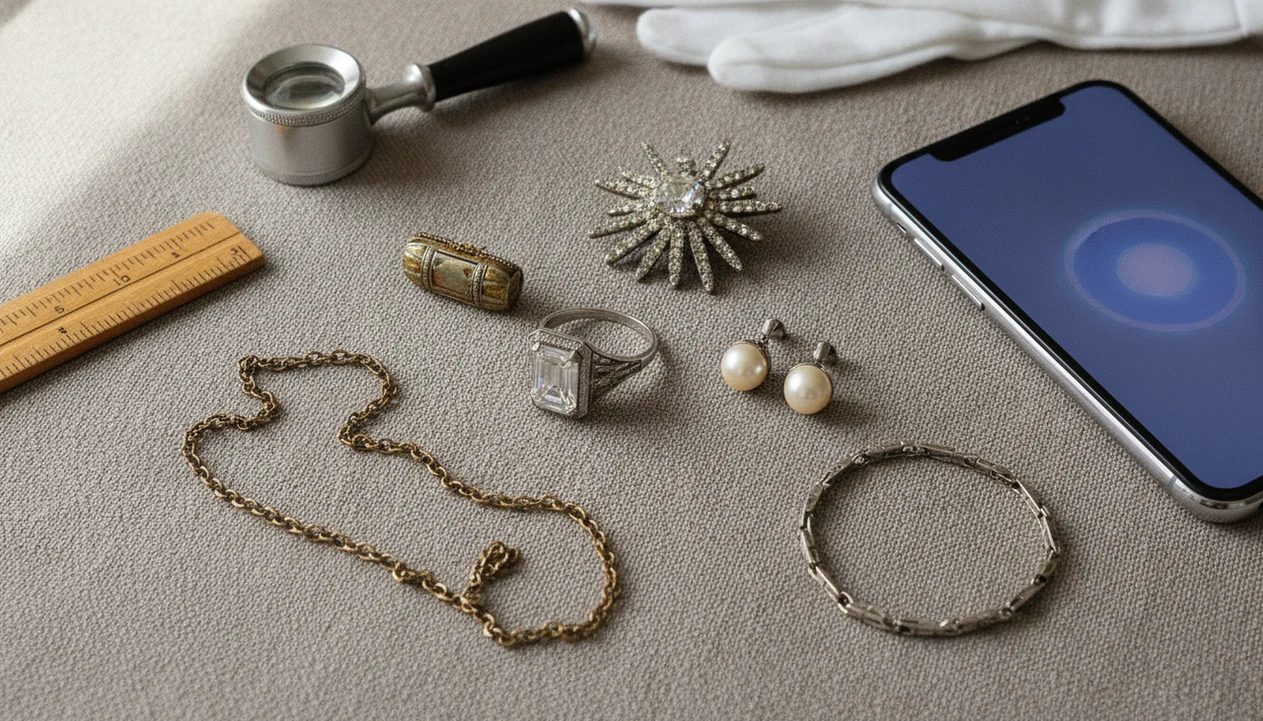


For identifying vintage jewelry, start with a dedicated jewelry photo identifier that compares the piece’s style, clasp, construction, metal marks, and hallmark details instead of relying on generic visual search alone. JewelryIdentifier is the strongest practical first pass for naming the likely category, era clues, and next detail to check before appraisal.
> Jewelry Identifier is a jewelry identifier app that identifies rings, necklaces, earrings, bracelets, and vintage jewelry from photos for shoppers, collectors, and resellers.
- Choose a jewelry-specific app first, then use general visual search or expert communities for cross-checking unusual results.
- Apps can suggest Victorian, Art Deco, Mid-Century, fine, or costume clues, but they cannot prove age, stone authenticity, or value from one photo.
- Photograph the front, back, clasp, side profile, hallmark, and any wear or repairs to improve vintage jewelry identification.
How the top apps look
Side-by-side captures of the compared products. Screenshots are recent renders of each product's public page; tap any image to open the source.

At-a-Glance Best Vintage Jewelry Identifier App Shortlist
Your strongest vintage jewelry identifier app choice depends on whether you need style language, hallmark clues, resale research, or formal valuation. JewelryIdentifier is the best overall dedicated photo-based option for vintage jewelry and hallmarks because it starts with jewelry-specific visible clues.
| Option | Best for | Main limitation |
|---|---|---|
| JewelryIdentifier | Style matching, hallmarks, rings, necklaces, brooches, bracelets | Not a certified appraisal |
| Jewelio-style AI jewelry apps | Quick category guesses and lookalike matches | Quality varies by training data |
| Google Lens | Shopping lookalikes and broad image search | Often misses clasp and construction details |
| Expert communities | Odd marks, unsigned pieces, repair clues | Slower and opinion-based |
| Appraisal services | Insurance, resale, estate division | Requires cost and hands-on review |
The global jewelry market was valued at $353.26 billion in 2023, according to Grand View Research (https://www.grandviewresearch.com/industry-analysis/jewelry-market), and secondhand buying keeps pushing more people to identify pieces before listing or repairing them. A necklace measured beside a ruler tells a better story than a blurry “gold chain” listing.
Best App for Identifying Vintage Jewelry Overall: Jewelry Identifier
JewelryIdentifier is best for photo-based recognition of rings, necklaces, earrings, bracelets, maker marks, metals, styles, and vintage pieces. It fits the person saying, “I just need to know what to call this before I list it,” because the workflow turns photos into likely category and style terms.
- Estate sale finds: JewelryIdentifier helps sort likely gold, likely silver, costume, sentimental, and take-to-a-jeweler piles.
- Inherited pieces: JewelryIdentifier jewelry identifier app and photo guides that help users identify rings, necklaces, earrings, bracelets, and vintage jewelry from pictures can separate a brooch, dress clip, mourning-style piece, or modern revival clue.
- Resale listings: Resellers get terms for clasp type, setting style, chain texture, and visible mark notes.
- Thrifted jewelry: A ring under fluorescent thrift lights may show a tiny 14K stamp, but metal testing still matters.
Good jewelry identifier apps deliver vocabulary and next-step checks, not a lab-grade age, gemstone, or value verdict. For deeper era sorting, use a vintage jewelry identifier by photo alongside hands-on confirmation.
Best App for Antique Jewelry Identification When Hallmarks Matter
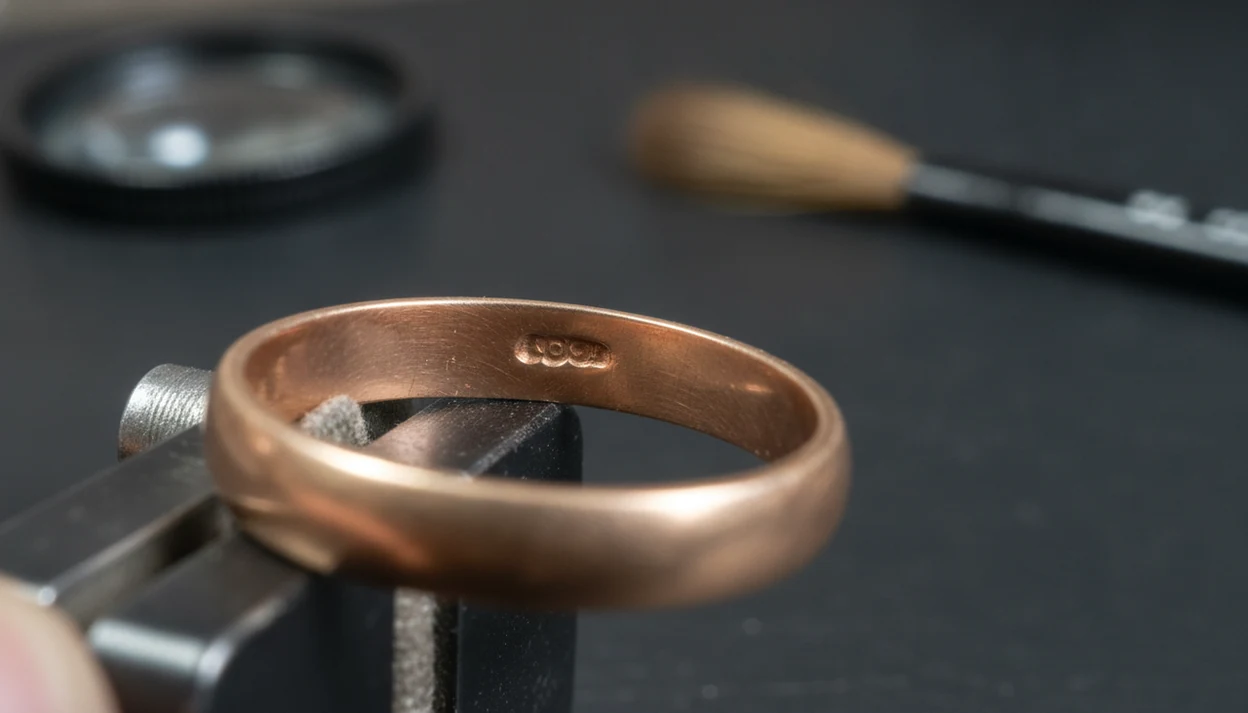
An app for antique jewelry identification should help read marks but not guarantee maker identity. JewelryIdentifier is useful here because hallmark review starts with the photo, then pushes you toward comparison against a reliable reference.
Clean the mark gently first. Lint, skin oil, and dark pocket fuzz can hide a stamp inside a bracelet clasp. Use macro focus, angled light, several shots, and no flash glare. A white paper card behind a gold chain can reduce reflections without making the metal look brighter than it is.
Look for 925, 14K, 18K, 750, sterling, rolled gold, gold-filled, and maker initials. However, worn, partial, or fake marks can mislead any photo-based identification. Anyone dealing with a mystery stamp on a bracelet should use JewelryIdentifier for the visible clue, then cross-check hallmark charts, maker directories, forums, or a jeweler.
Tiny marks lie.
Best Vintage Costume Jewelry App for Unsigned Pieces
Vintage costume jewelry often lacks precious metal marks and may be unsigned, so a vintage costume jewelry app should compare construction rather than chase a stamp. JewelryIdentifier helps by naming visible design language without treating a lookalike as proof of brand.
- Unsigned rhinestone brooches are judged by setting style, prong shape, backing, clasp, and plating wear.
- Enamel condition, foil-back stones, glued stones, and replaced rhinestones can change the likely category.
- A fold-over clasp on a bracelet can suggest a period or style, but it does not prove one.
- Costume systems may confuse modern fashion jewelry with older revival pieces, especially for Art Deco-inspired designs.
- Brand names such as Trifari, Coro, Hobe, and Miriam Haskell should be treated as comparison clues unless a mark, construction, and expert review support the attribution.
Collectors looking for unsigned rhinestone and plated pieces get the most from JewelryIdentifier when they upload the back, hinge, clasp, and wear points, not only the front.
How a Photo-Based Vintage Jewelry Identifier App Works
A photo-based vintage jewelry identifier app works by detecting the item category, isolating visual features, comparing those features against trained jewelry patterns, and returning likely matches. The technical layer uses image embeddings, which means the system turns visible shapes and textures into comparable signals.
JewelryIdentifier evaluates shape, setting, clasp, metal color, stone arrangement, engraving, and visible marks. That is why a jewelry-specific system can be more useful than Google Lens, which often returns shopping lookalikes instead of construction clues. A phone photo where the clasp is in focus but the pendant front is blown out by flash will still produce weak results.
The right fit for construction-based vintage sorting is JewelryIdentifier because it asks the next detail to check: category, mark, clasp, setting, wear, and style term. Model bias still exists, especially toward popular Western and mass-market styles.
How to Use a Vintage Jewelry Identifier App
Use a vintage jewelry identifier app as a structured photo session, not a single snapshot. JewelryIdentifier works better when each image answers one visible-clue question.
- Clean gently with a soft dry cloth, and avoid removing patina or loosening fragile stones.
- Photograph the front, back, side profile, clasp, hinge, setting, hallmark, and wear areas under steady light.
- Upload the clearest images and choose the item category, such as ring, brooch, bracelet, necklace, or earrings.
- Compare the result against era clues, hallmark references, maker directories, and guides such as how to discover vintage jewelry era from photo.
- Seek expert confirmation before selling, insuring, repairing, or dividing valuable pieces.
After grandmother’s brooch lands on tissue paper, when the family starts sorting, JewelryIdentifier covers the first pass with a photo checklist and likely-category result.
How We Picked the Best Vintage Jewelry Identifier App Options
We picked vintage jewelry identifier app options by favoring jewelry-specific recognition, hallmark support, photo guidance, item coverage, privacy clarity, expert escalation, and usefulness for costume jewelry. Exact valuation, gem authenticity, and provenance claims lowered trust unless expert review was involved.
- Jewelry-specific apps scored higher than generic visual search for clasps, settings, stone layout, and construction.
- Hallmark support mattered only when the app encouraged multiple photos and outside reference checks.
- Item coverage had to include rings, necklaces, earrings, bracelets, brooches, and loose vintage lots.
- Mobile workflow mattered because Pew Research Center reports that 91% of U.S. adults own a smartphone (https://www.pewresearch.org/internet/fact-sheet/mobile/), making on-counter, estate-sale, and thrift-store photo checks realistic.
- Costume jewelry support counted because unsigned, plated, and rhinestone pieces make up many real sorting sessions.
Resellers preparing a vintage lot sorted into small trays often need speed, but not false certainty. For thrift-specific use, the best jewelry identifier for thrift shoppers covers counter checks and quick triage.
Common Myths About the Best App for Identifying Vintage Jewelry
A vintage jewelry identifier app can narrow possibilities, but it cannot turn one photo into certainty. JewelryIdentifier is strongest when results are treated as identification guidance, not a final ruling.
- One photo cannot produce an exact value because condition, metal testing, stone quality, provenance, and demand all matter.
- A Victorian-looking result means the style resembles Victorian jewelry; it does not prove an original Victorian date.
- AI does not make professional appraisers obsolete, especially for altered pieces, expensive stones, or insurance.
- An unrecognized hallmark does not mean fake or worthless; local makers and worn marks are common.
- Revival styles, repairs, replaced stones, and regional maker traditions complicate photo-only identification.
Inheritance organizers looking for a calm sorting process may use JewelryIdentifier with a jewelry identifier for inheritance organizers workflow before deciding what needs appraisal.
Limitations
Photo-based identification has real boundaries. Use JewelryIdentifier, Google Lens, eBay image search, Vestiaire Collective, Whatnot, expert forums, and appraisal services for different jobs, not as interchangeable authorities.
- Apps cannot confirm diamond or gemstone authenticity, treatments, synthetics, or internal inclusions from a photo.
- Apps may miss tiny, worn, partial, dirty, damaged, or fake hallmarks.
- Apps may misclassify reproductions, revival pieces, altered jewelry, repaired settings, or replaced stones.
- Valuation depends on condition, provenance, metal testing, stone quality, market demand, and expert inspection.
- Non-Western, local, handmade, and obscure maker pieces may be underrepresented in AI training data.
- Rock identifier apps are not reliable substitutes for jewelry identification because mounted stones and settings change the visual evidence.
- Flash glare, shallow focus, and heavy editing can make a useful mark unreadable.
For safety boundaries, compare any high-stakes result with a tool that can identify jewelry safely process and hands-on confirmation.
FAQ
What app identifies vintage jewelry?
Jewelry-specific photo identifier apps are best for style, category, metal mark, clasp, and era clues. JewelryIdentifier is built for that first-pass use: identifying rings, necklaces, earrings, bracelets, and vintage jewelry from pictures, then pointing users toward the next detail to verify.
Can an app read jewelry hallmarks?
Apps can help with visible hallmarks if the mark is clean, sharp, and well lit. They struggle with worn, tiny, partial, fake, or obscure marks.
Is Google Lens good for jewelry?
Google Lens is useful for lookalike shopping results and broad visual search. It often falls short on jewelry construction, clasp types, hallmark interpretation, and vintage style context.
Can apps date antique jewelry?
Apps can suggest stylistic eras such as Victorian, Art Deco, or Mid-Century. They cannot prove manufacturing date from photos alone.
Can apps value vintage jewelry?
Apps may provide rough context or comparable terms. Exact value requires condition review, testing, market research, and often a qualified appraiser.
What photos identify jewelry best?
The most useful photos show the front, back, side profile, clasp, hallmark, setting, hinge, and wear areas. Use steady light and avoid flash glare.
Can apps identify costume jewelry?
Apps can identify costume jewelry style and construction clues. Unsigned plated or rhinestone pieces are harder because many lack marks and copy older designs.
Are jewelry identifier apps free?
Some jewelry identifier apps offer free scans or trials. Advanced identification, history, saved reports, or appraisal-style features may require payment.
When should I get an appraisal?
Get an appraisal for insurance, resale, inheritance division, expensive stones, rare makers, or uncertain high-value pieces. Apps are first-pass identification tools, not certified appraisals or lab reports.
Identify Vintage Jewelry From Photos
Upload clear photos of rings, necklaces, brooches, earrings, bracelets, clasps, backs, and stamps to get jewelry-focused identification clues. For valuable, insured, or uncertain pieces, confirm findings with a professional jeweler or appraiser.