
App That Reads Stamps Inside Rings From Close-Up Photos
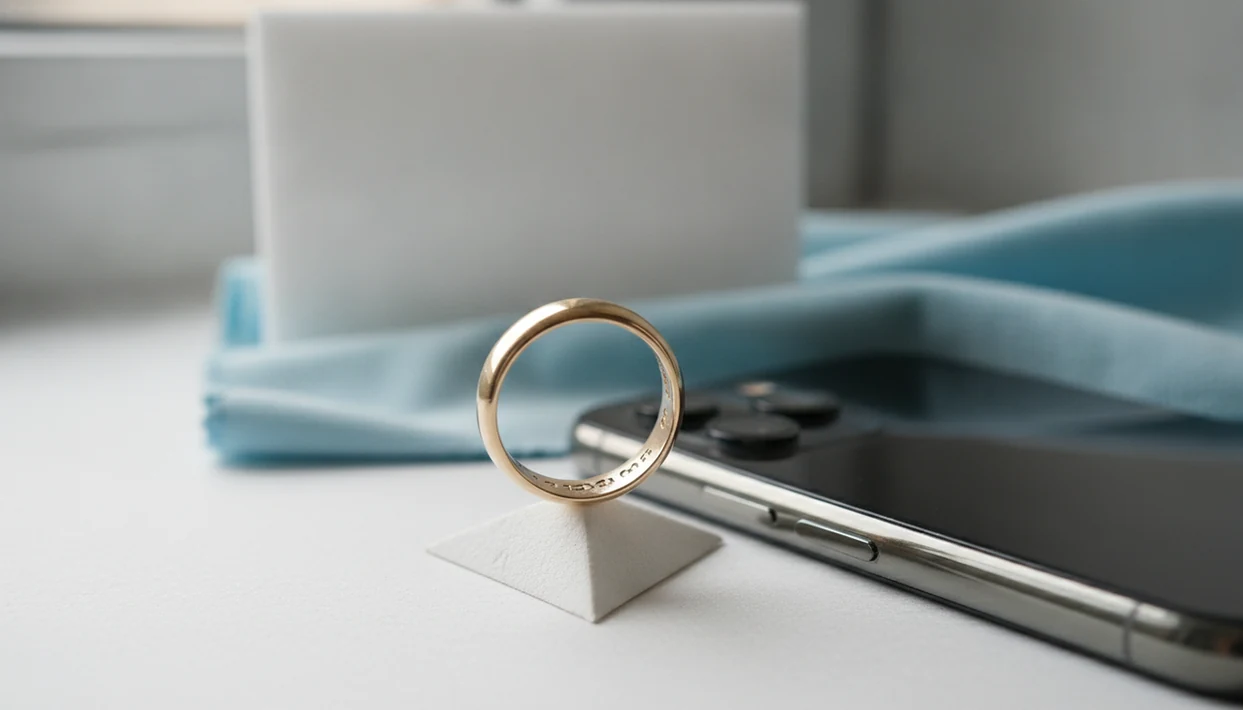


Yes, an app that reads stamps inside rings can help decode tiny marks like 14K, 925, PLAT, maker initials, and worn hallmarks from a sharp close-up photo. It should be treated as a first-pass jewelry identification tool, not proof of gold content, gemstone authenticity, or resale value.
A ring stamp identifier app analyzes close-up photos of the inside of a ring band to suggest what visible purity stamps, hallmarks, maker marks, and engraved symbols may mean.
- Use a clean ring, macro focus, bright indirect light, and several angles to capture an inside ring hallmark photo.
- An app can help read 14K inside ring bands and explain likely metal meanings, but it cannot chemically verify gold or platinum.
- Verify important marks with a jeweler, especially for vintage, high-value, plated, counterfeit, or heavily worn rings.
How these apps look
Side-by-side captures of the compared products. Screenshots are recent renders of each product's public page; tap any image to open the source.

Ring Stamp Identifier App Meaning for Inside Band Marks
A ring stamp identifier app reads visible marks from a photo of the ring, not the physical metal itself. It can suggest meanings for stamps such as 10K, 14K, 18K, 925, PLAT, maker initials, assay symbols, and small engraved shapes.
JewelryIdentifier is a jewelry identifier app and photo guides that help users identify rings, necklaces, earrings, bracelets, and vintage jewelry from pictures. Tools like this are useful when you’re squinting at a tiny mark under thrift-store fluorescent lights and thinking, “I just need to know what to call this before I list it.”
The result is still a likely interpretation. Not a certificate. A photo can show a mark, spacing, and wear pattern, but it cannot prove alloy content, age, or authenticity.
Five Facts About Apps That Read Stamps Inside Rings
- Apps use image recognition and AI comparison to match visible ring stamps against known jewelry markings, maker marks, and hallmark patterns.
- Sharp lighting and focus matter because blur can turn a clean “14K” into something that looks closer to “18K” or unreadable scratches.
- Marks like 14K, 18K, 925, or PLAT suggest a likely metal category, but important claims need hands-on confirmation.
- Worn or partial marks can still help when paired with full-ring photos showing setting style, metal color, stone appearance, and band shape.
- Hallmark systems vary by country, maker, assay office, and era, so one symbol may need more than one reference check. For example, UK hallmarking rules describe legally required marks differently from U.S. jewelry-marketing guidance, so imported or antique rings often need country-specific references: https://www.gov.uk/guidance/hallmarking-notice.
For home sorting, photo-based stamp reading is often faster than manual searching because it gives you the next detail to check first.
Photo Recognition Workflow for Ring Stamps Inside Bands
How photo-based ring stamp recognition works: the phone camera captures the inside band, the app crops or detects the hallmark area, and image-recognition models compare the visible mark against known character and symbol patterns. In plain terms, it looks for shapes that resemble jewelry stamps.
The scan does not stop at letters. It may evaluate character edges, spacing, engraving depth, curved-band distortion, and nearby surface wear. A shallow “K” with polished edges reads differently from a fresh machine stamp.
Whole-ring context matters too. Setting style, metal color, stone appearance, shoulder shape, and hallmark placement can all narrow the likely category. A signet ring, thin wedding band, and antique cluster ring may carry marks in different ways. If you also need style vocabulary, a ring identifier by picture guide can help connect the stamp to the ring type.
More photos usually improve confidence. One blown-out flash shot is rarely enough.
Inside Ring Hallmark Photo Requirements Before You Scan
What do you need before taking an inside ring hallmark photo? You need a clean band, bright indirect light, macro focus, a steady phone, and several angles that show the mark without glare.
Wipe the inside band with a soft cloth first. Lint, skin oil, and dark pocket fuzz can hide a mark inside a bracelet clasp, and rings collect the same grime in tighter spaces. Use daylight near a window or a shaded lamp, not a direct flash bouncing inside the curved metal.
Set the ring on a plain background. A folded white card or matte gray cloth works better than a shiny countertop. Tap the stamp on your phone screen to focus, then steady your hand against the table. If your phone offers macro mode, use it.
Take three to six photos from slightly different angles. The next photo often saves the scan.
How to Use an App to Read 14K Inside Ring Stamps
To read 14K inside ring stamps with an app, photograph both the close-up mark and the whole ring, then treat the result as a likely reading to verify. The mark gives one clue; the ring’s full design gives context.
- Set the ring so the inside mark faces the camera, with the band tilted until the stamp catches soft light.
- Clean the band with a dry, soft cloth, then remove lint from the stamped area.
- Light the ring with bright indirect light, avoiding flash glare inside the curved band.
- Capture close-up hallmark photos, then take full-ring photos of the top, side, underside, and setting.
- Review the app’s likely mark reading, confidence cues, and alternate matches before naming the metal.
- Save the result for appraisal notes, resale listing prep, or collection records.
- Verify valuable, inherited, vintage, or uncertain rings with a jeweler.
If you are choosing a tool first, a download ring identifier app page can help you compare photo-first options. For a second opinion, compare the app’s reading with Google Lens, WorthPoint sold-listing research, or an established hallmark reference before using the wording in a resale listing.
Common Ring Stamp Identifier App Misreads and Photo Mistakes
Blur is the most common reason a ring stamp identifier app misreads tiny marks. A soft image can make 14K look like 18K, or turn 10K into a vague groove with no reliable text.
Glare is another problem. Curved bands bounce light back into the camera, especially on polished yellow gold and platinum-tone rings. Phone photos where the clasp is in focus but the pendant front is blown out by flash have the same problem: the visible clue exists, but the exposure ruins it.
Worn, double-stamped, hand-engraved, or partially polished marks need caution. Do not rely on one photo only. Use the stamp, the full-ring view, and reference checks together. For broader visual matching, find ring style from photo can help when the mark is incomplete.
Myth: A 14K stamp proves gold
A 14K stamp suggests a gold fineness claim, but it does not prove the ring is solid gold. Counterfeit, plated, altered, or misrepresented jewelry can carry misleading marks.
Myth: Worn marks cannot be identified
A worn mark may still be useful if a few characters, symbol edges, or placement clues remain. The full ring photo can help narrow the likely category.
Professional Verification for Inside Ring Hallmark Photo Results
Professional verification is needed when a stamp reading affects resale, insurance, inheritance, or a high-value decision. Start by cross-checking the app result against reliable hallmark references, then ask a jeweler or appraiser to test the item.
Gold, platinum, and gemstone claims need tools a photo cannot provide. Common next steps include acid testing, XRF analysis, assay office testing, and qualified appraiser review. XRF, short for X-ray fluorescence, estimates alloy composition far more directly than a photo because it measures material response rather than reading an engraved surface.
U.S. jewelry-marketing rules treat under-karating and misleading precious-metal claims seriously; the FTC’s Jewelry Guides cover gold, silver, platinum, and related marking claims: https://www.ecfr.gov/current/title-16/chapter-I/subchapter-B/part-23. That is why a stamp should be evidence, not the final answer.
Good jewelry identifier app and photo guides that help users identify rings, necklaces, earrings, bracelets, and vintage jewelry from pictures deliver clearer vocabulary and next-step checks, not authentication from a photo.
Limitations
Photo-based identification is useful, but it has hard limits. An app can organize visible clues, yet hands-on confirmation is still the safer path for important pieces.
- An app cannot chemically analyze metal or gemstones from a photo.
- A 14K, 18K, 925, or PLAT stamp can be fake, wrong, plated, altered, or misleading.
- Worn, tiny, distorted, double-stamped, or hand-engraved marks may produce wrong matches.
- Low light, blur, shadows, reflections, and glare can sharply reduce image-recognition accuracy.
- Hallmark systems vary by country, assay office, maker, and time period.
- Missing marks do not make identification impossible, but they reduce certainty.
- An app cannot guarantee diamond authenticity, natural origin, treatment status, or market value.
- Professional appraisal, assay, or lab testing is still needed for insurance, resale, inheritance, or high-value decisions.
Kitchen-table sorting works better with piles: likely gold, likely silver, costume, sentimental, and take-to-a-jeweler. The last pile matters.
FAQ
Is there an app for ring stamps?
Yes, jewelry identifier apps can read visible ring stamps from close-up photos and suggest likely meanings. The result should be treated as an interpretation, not certification.
Can an app read a 14K stamp inside a ring?
Yes, an app can help read 14K inside ring bands if the photo is sharp and well lit. It cannot prove the ring’s gold content.
Where are ring stamps usually located?
Ring stamps are usually inside the band, often near the bottom, shoulder, or area opposite the main setting. Some older or resized rings may have faint or missing marks.
How do I photograph ring hallmarks clearly?
Clean the inside band, use bright indirect light, turn on macro focus, and take several angles. Avoid flash glare and reflective backgrounds.
What does 925 inside a ring mean?
925 usually indicates sterling silver, meaning 92.5% silver by standard marking convention. It still needs verification for valuable or questionable pieces.
Can fake rings have stamps?
Yes, fake, plated, altered, or misrepresented rings can carry stamps. A mark is a claim, not proof.
Can worn ring stamps be identified?
Sometimes, worn stamps can be interpreted from partial characters, symbol fragments, placement, and full-ring photos. Confidence is lower when the mark is heavily damaged.
Do all countries use the same ring hallmarks?
No, hallmark systems differ by country, era, maker, and assay office. Regional references may be needed for older or imported rings.
Should a jeweler verify ring stamps?
Yes, a jeweler should verify stamps on valuable, vintage, inherited, or resale jewelry. Tools like JewelryIdentifier can help with first-pass wording before that visit.
Read ring stamps more clearly from photos
Use Jewelry Identifier to scan sharp inside-band photos and get a practical, cautious interpretation of visible ring marks. For expensive pieces, confirm results with a qualified jeweler or appraiser.