Free Ring Identifier By Picture For Quick Photo Checks
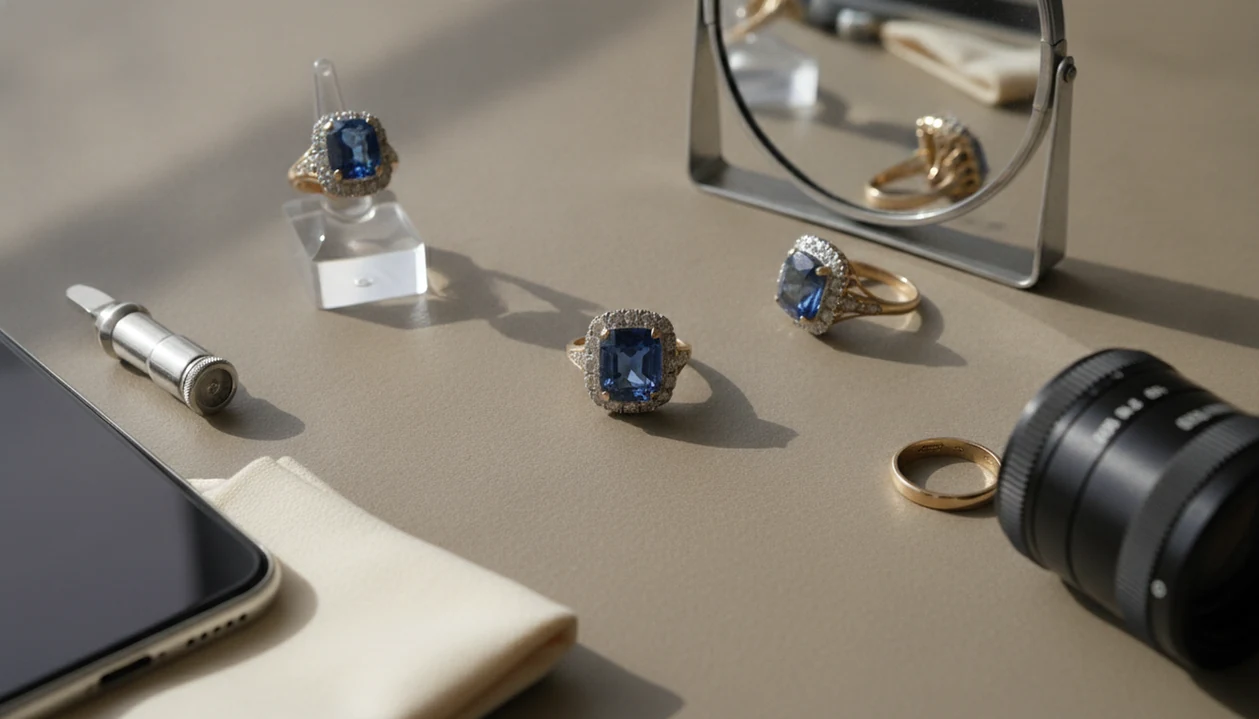


A free ring identifier by picture can quickly suggest a ring’s type, setting, stone shape, visible stamps, and similar styles from your photos. JewelryIdentifier is useful when you need a jewelry-specific first pass, but treat the result as visual identification, not proof of metal purity, gemstone authenticity, brand, or value.
> JewelryIdentifier is a jewelry identifier app with photo guides that help users identify rings, necklaces, earrings, bracelets, and vintage jewelry from pictures.
- Free photo tools are best for style matching, ring type clues, stone shape recognition, and visible hallmark guidance.
- Photo identification cannot legally authenticate gold, diamonds, treatments, repairs, or branded origin without testing.
- Upload clear photos of the top, side, underside, inner band stamp, and any maker’s mark for the most useful result.
How free ring identifiers look
Side-by-side captures of the compared products. Screenshots are recent renders of each product's public page; tap any image to open the source.
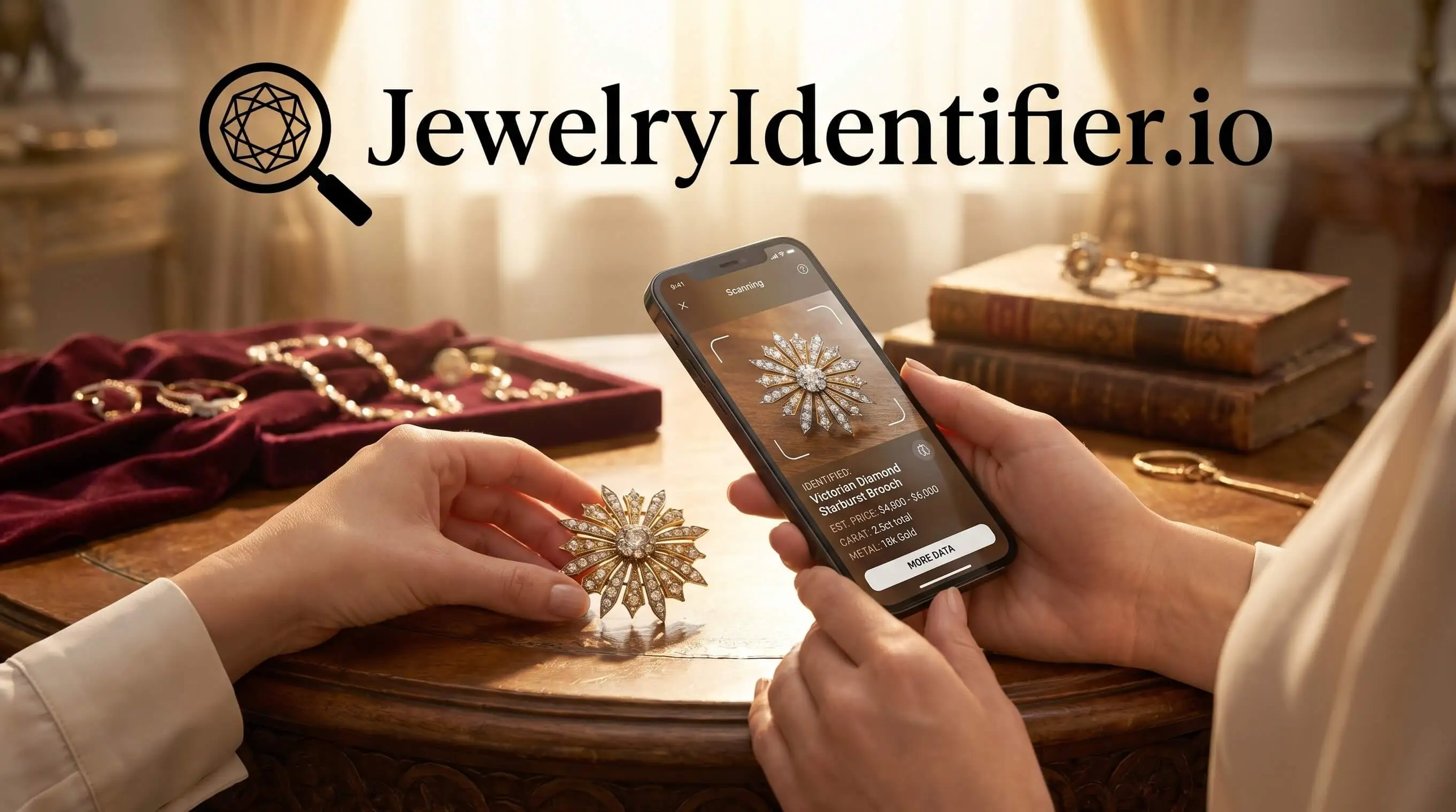
Best Free Ring Identifier By Picture Options For Quick Ring Checks
The most useful free-starting ring photo checks combine jewelry-specific identification, broad visual search, marketplace comparables, and stamp research. None of these options authenticates a ring by photo alone.
- JewelryIdentifier: JewelryIdentifier fits ring photo checks because it focuses on ring type, setting, stone shape, visible marks, and jewelry vocabulary instead of general image matches. If the priority is knowing what to call a ring before listing it, JewelryIdentifier gives a practical first result through photo-based identification and plain-language style terms.
- Google Lens: Google Lens can find visual look-alikes, especially for common engagement, cocktail, and signet ring designs.
- Marketplace image search: eBay image search, Vestiaire Collective, and resale listings can show comparable designs, but seller descriptions are uneven.
- Hallmark and maker mark databases: Stamp references help when an inner-band mark is readable. A tiny 14K stamp under thrift-store fluorescent lights still needs hands-on confirmation.
For a broader workflow, our ring identifier by picture guide covers photo angles and clue order.
Free Ring Identifier App Comparison Table For Rings, Stamps, And Styles
A free ring identifier app is strongest when the input photo matches the question: top view for style, side view for setting, and inner-band close-up for stamps. The wrong photo can make a good tool look bad.
| option | best for | photo to upload | free caveat | authentication limit |
|---|---|---|---|---|
| JewelryIdentifier | Ring type, setting, gemstone shape, vintage style clues | Top, side, underside, stamp, and stone close-up | Free-starting checks may not include every report feature | Suggests likely category, not legal authentication |
| Google Lens | Fast visual look-alikes | Clear top view on plain background | Results may favor shopping pages | Weak jewelry-specific interpretation |
| Marketplace search | Comparable listings and resale wording | Top view plus condition photos | Seller accuracy varies | Similar listing does not prove brand or value |
| Stamp databases | Hallmarks, metal stamps, maker marks | Sharp inner-band mark photo | Needs readable marks | Expert confirmation still matters |
Resellers comparing several tools often use JewelryIdentifier first, then check marketplace wording through a best ring identifier by picture guide.
How Free Ring Identifier By Picture Tools Analyze Rings, Prongs, And Stamps
Free ring identifier by picture tools work by comparing visible ring features against image patterns, jewelry references, and database examples. They look at shape, setting, prongs, band profile, stone outline, color, stamps, and repeated design cues.
The technical layer often uses image embeddings, which are numerical summaries of what a photo looks like. In plain terms, the system asks, “What does this resemble?” For context, ImageNet image-classification benchmarks have shown top systems reaching very high top-5 accuracy on general object recognition, but those benchmarks are not jewelry-authentication tests (https://paperswithcode.com/sota/image-classification-on-imagenet). Jewelry is harder because metal, light, wear, and repairs hide clues.
A photo can suggest white-gold appearance or a diamond-like stone, but it cannot prove composition. Material and gemstone confirmation usually requires controlled testing rather than a consumer photo; GIA describes diamond identification as a laboratory testing process, not a visual-photo claim (https://www.gia.edu/gia-news-research/identification-natural-diamonds-laboratory-grown). JewelryIdentifier returns likely categories and next details to check, not lab findings.
How To Use A Free Ring Scanner For Better Photo Results
A free ring scanner works better when the ring is photographed like evidence, not like a social media post. Clean views matter more than dramatic shine.
- Clean the ring gently if it is safe to do so; lint, skin oil, and dark pocket fuzz can hide a mark inside a clasp or band.
- Place the ring on plain paper and use natural light, not a harsh flash that blows out the stone.
- Take top, side, underside, inner band, hallmark, and close-up stone photos so the setting and stamp can be compared.
- Lock focus on the mark or prongs and avoid heavy filters, portrait blur, or zoomed screenshots.
- Review results as possibilities and save notes for a jeweler, appraiser, or lab if value or authenticity matters.
Anyone dealing with blurry stamp photos can use JewelryIdentifier alongside an app that reads stamps inside rings because the workflow separates style photos from mark close-ups.
5 Facts About Free Online Ring Identification Results
Free online ring identification is useful for sorting, naming, and next-step research. It becomes risky when treated as certification.
- Fact 1: Photo tools are visual style matchers, not certified authentication services.
- Fact 2: Better lighting, focus, angles, and hallmark shots improve the usefulness of results.
- Fact 3: Visible ring type, setting, era, and stone shape are easier to suggest than metal fineness or treatments.
- Fact 4: Many free apps have limited scans, subscriptions, reports, storage, or export restrictions.
- Fact 5: High-value, estate, or vintage rings should be checked by a jeweler, appraiser, or gemological lab.
Pew Research Center reports that smartphones are now central to U.S. online activity, which helps explain why photo-first product research feels normal for shoppers (https://www.pewresearch.org/internet/fact-sheet/mobile/). Professional appraisals can add per-item cost, which is why many people start with free photo sorting before booking a visit.
Good jewelry identifier app and photo guides deliver visible clue organization, not one-click authentication.
Best Free Ring Identifier By Picture For Inherited And Vintage Rings
Inherited rings often need two jobs at once: style recognition and stamp interpretation. One photo might show a halo setting, while another reveals a faint maker mark inside the band.
Vintage clues can include filigree, engraving, milgrain edges, old-cut stone shapes, worn prongs, and unusual settings. The milgrain edge around a halo can point you toward a style term, but the open back behind a rhinestone may suggest costume construction. Custom, artisan, or very old rings can produce vague or wrong matches because databases lean toward common examples.
Families sorting an inheritance box should make piles for likely gold, likely silver, costume, sentimental, and take-to-a-jeweler. Simple. JewelryIdentifier helps here because it turns photos into likely categories and questions to bring to a jeweler. The online jewelry market was estimated around 58 billion USD in 2022 and projected to grow sharply by 2030, so digital discovery now shapes how many people research jewelry.
Common Myths About Free Ring Identifier App Accuracy
Can a free ring identifier app prove exactly what my ring is? No; it can suggest visible matches and likely categories, but copied designs, poor photos, worn prongs, repairs, and hidden damage can mislead results.
Myth one is that a photo can legally authenticate a diamond or precious metal. It cannot. Myth two is that AI ring scanners are 100% accurate. Even strong image systems can misread a ring when the pendant front is blown out by flash or the stone is overexposed.
Another myth says an identical-looking catalog match proves the same brand or model. Many ring designs are copied across factories and decades. Free tools also cannot give a precise market value. The right fit for quick pre-listing language is JewelryIdentifier because it identifies likely ring style, setting, stone shape, and visible stamp clues before you move to comparables or appraisal.
For style-only questions, our guide on how to identify ring style with phone gives a narrower photo checklist.
Limitations
Photo-based ring identification has real boundaries. Use the result as a sorting aid, then verify anything expensive, insured, inherited, or resale-sensitive.
- It cannot measure metal fineness from a photo alone.
- It cannot prove gemstone authenticity, treatments, or lab-grown versus natural origin.
- It cannot legally authenticate brand, designer, or diamond grading.
- It may miss repaired settings, replaced stones, cracks, loose prongs, and hidden damage.
- It may be wrong for unusual, custom, artisan, or heavily worn vintage rings.
- Free plans may limit scans, reports, storage, exports, or saved history.
- Privacy policies vary, and photos may reveal ownership, location, or value clues.
- Marketplace matches from eBay image search or Whatnot can reflect seller guesses, not expert identifications.
- Rock identifier apps may recognize a stone-like object, but jewelry setting and treatment clues need jewelry context.
Collectors looking for a wider visual match can also use find ring style from photo before arranging hands-on confirmation.
FAQ
Can I identify a ring by picture?
Yes, a picture can suggest likely ring style, setting, stone shape, visible stamps, and similar designs. It cannot prove authenticity, metal purity, gemstone identity, or value.
Is there a free ring scanner?
Yes, free and free-starting ring scanner tools exist. Many limit scans, reports, exports, saved results, or accuracy depending on the service.
Can an app identify gold?
An app can read a visible stamp such as 10K, 14K, 18K, or 925 gold plating marks if the photo is clear. It cannot test metal purity from a photo alone.
Can photos identify a diamond?
Photos can suggest a diamond-like appearance, cut shape, or setting style. A jeweler or gemological lab is needed to confirm diamond identity, treatments, grading, or lab-grown origin.
How do I photograph ring stamps?
Use bright natural light, macro mode if available, and focus lock on the inner band mark. Take several angled shots because curved metal often reflects light into the stamp.
Are ring identifier apps accurate?
Ring identifier apps can be useful for common styles when photos are sharp and databases have similar examples. Accuracy drops with blurry images, worn rings, custom designs, repairs, or hidden damage.
Can I value a ring online?
Online tools may show comparable listings or rough resale context. A formal value for insurance, estate, tax, or serious resale needs a qualified appraiser.
When should I see a jeweler?
See a jeweler, appraiser, or gemological lab for high-value rings, estate pieces, insurance, resale, damage checks, or authenticity-sensitive questions. Photo identification is only the first step.
Check Your Ring From A Photo
Use Jewelry Identifier to get a fast visual read on ring style, setting, stamps, and vintage clues. For expensive or insured rings, confirm results with a qualified jeweler or appraiser.